
Much like us, dogs are likely to protect those things that they find valuable. While it is normal and natural for dogs to gather and guard food, bones, toys, and other re- sources, this instinct can get a pet dog into a whole lot of trouble. It is obviously not appropriate for a dog to growl or snap when someone tries to take something from him. You can help your dog avoid potential problems by showing him how rewarding it is to relinquish resources at your request.
Resources Your Dog Might Consider Protecting
✓ Food
✓ Locations (such as a bed or couch)
✓ People
✓ Toys
Mealtime Handling
The food bowl is one of the resources a dog is most likely to guard. To prevent food bowl guarding, set aside at least a few minutes every day to participate in your dog’s mealtimes. Your goal is to have a dog who is comfortable with people being near him while he eats (you should be able to walk close by, touch him, and put your hands in the bowl while he eats), and who is comfortable with you taking his bowl away.
Don’t just set your dog’s food down and walk away. Hang around while he eats. Touch him and talk to him. Every once in a while, particularly when you touch him, put a tasty treat in his bowl and show him how rewarding it is to have humans around his bowl.
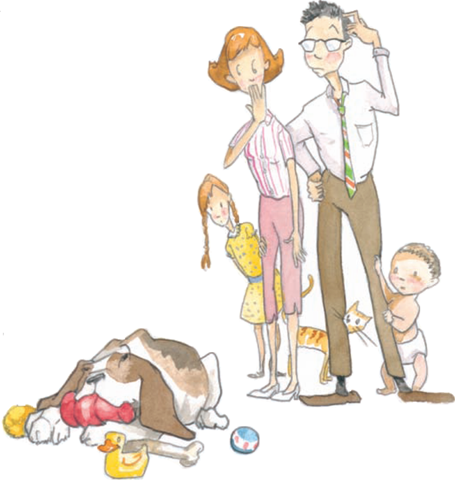
Mine! All mine! (This could be a problem. . . .)
Sit next to your dog and hold his bowl in your hand or lap. Hand-feed him a few bits of his meal at a time as you gently touch a part of his body. Now put the bowl on the ground next to you, place your hand with a few bits of food in the empty bowl, and let your dog eat the food from your hand. Then place the empty bowl on the ground, drop in a few bits of food, and reach toward the bowl to drop in a few more bits — and maybe even a special treat that you know your dog likes better than his normal meal. This way, he will start to understand that having you (and eventually other people) near him makes his meals appear and sometimes be even better than normal.
Practice getting up and walking a few feet away and then back to the bowl so that you can reach down, take it away, and offer a bit of food from the other hand, or simply drop a bit of food or a tasty treat into the bowl and give it back to your dog. In both cases, your dog is learning that your approaching (and even taking away) the bowl is a good thing. When possible and appropriate, include as many family members and friends in these exercises as possible. Be sure that children are always supervised around your dog, especially near the food bowl. If your adult dog is exhibiting signs of guarding (becoming tense, growling, or snapping when people come near the bowl), consult a dog-friendly trainer who can work with you in person to resolve this issue safely.
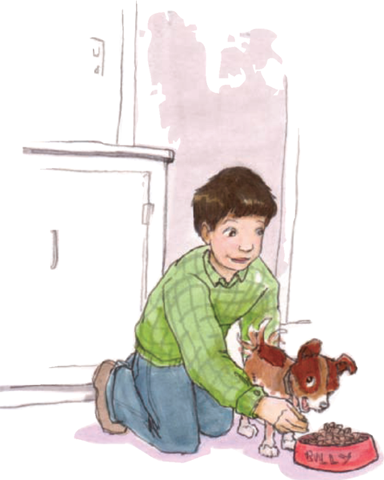
Mealtimes are a terrific opportunity to teach your dog to love having people near his food bowl and to prevent resource guarding.
Play the Trading Game
Regardless of how much he wants something, your dog must learn that if you or any other person reaches to take something away from him, he must relinquish it without a fuss. It is usually best to start this trading game with something that is of lower value to him, not his favorite toy. Simply offer him a toy and let him play with it for a moment or two. Then reach to take the toy as you say “thank you!” and offer a very tasty bit of food. Numerous repetitions of this game throughout the day are a surefire way to have your dog begging you to take away his toys. After a few three- to five-minute practice sessions, let him play with the toy (and get more engrossed in it) for a bit longer before you take it away and offer a treat.
Gradually introduce new toys to play the trading game with, working up to his favorites. When you play with objects you know your dog is more interested in, use food rewards that are more valuable. That is, with a toy of little interest, you can use a piece of your dog’s dry food. But when trading for his favorite toy, offer a favorite treat.
When you feel confident that your dog is happily relinquishing toys, you can start to teach him to respond to the words “thank you” without the signal of your hand showing the food. Just say the word and wait until your dog looks for your hand, mark the behavior of looking away from the object with a click or by saying “yes,” and then give the reward.
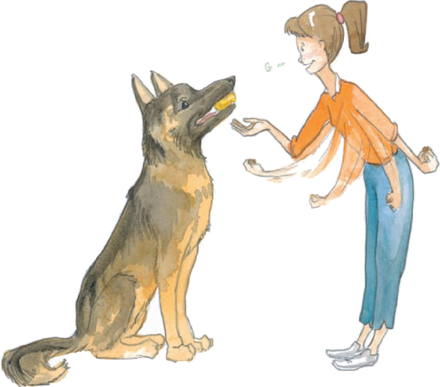
Teach your dog to enjoy exchanging valued possessions
Gotcha!
In an emergency, you may need to grab your dog to get a hold of him, and a tragedy could result if your dog doesn’t allow you to do so. Teach your dog to accept being grabbed by teaching him that it is a rewarding experience. Many times throughout the day, reach down to grab your dog’s collar, say “Gotcha!” and at the same time give him a treat. In no time at all, your dog will love being grabbed.
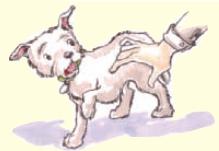

Many dogs learn to avoid letting people grab their collar because they think it means the end of play or they are in trouble. Teach your dog to love being grabbed by practicing the Gotcha! exercises many times each day. Pretty soon he’ll be begging to be grabbed!