Gentling and Handling

A great pet dog instills in his family the confidence that they or anyone else can easily handle and examine all parts of his body, take food and toys away from him, and play with him without fear of getting hurt. Practicing consistent gentling and handling exercises throughout your dog’s lifetime, starting when you first bring him home, is the best way to prevent problems, such as a dog who squiggles and squirms or, worse, growls or bites when you try to groom, medicate, or otherwise care for or play with him, or when you go near his food bowl or reach to take a toy from him. Teaching your dog to accept handling willingly and happily is a top priority. Don’t wait until your dog cuts his foot to find out that he doesn’t like having his feet touched, or until he growls at a visiting child who approaches his food bowl to find out that he guards his food and toys. 

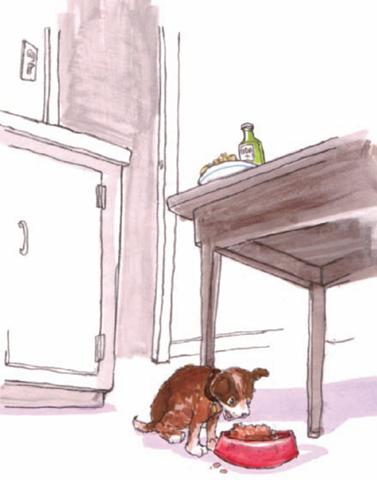
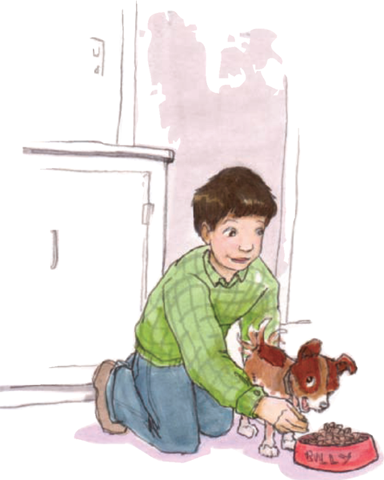
Consistently allowing your dog to eat his food alone may cause him to guard his food. Teach your dog to appreciate people being near his food bowl by making mealtimes a social experience. 

Handling Exercises Mealtimes Are Playtime!

As with all training, the more frequently you practice handling and the more fun and rewarding the exercises are, the more likely the exercises are to be successful. Therefore, practicing training exercises during your dog’s mealtimes is a great idea. You can practice body handling as well as basic manners. He’ll learn to associate being handled with something he already loves — his food. Also, since feeding your dog is part of your daily routine, practicing at mealtimes is a good reminder for you to maintain his skills by consistent repetition. Remember, the more you practice mealtime handling exercises, the more confident you can be that you will prevent problems later. 

Whenever possible and appropriate, include family members and friends in mealtime training exercises to teach your dog to appreciate people being near him when he eats his meals.  

Play Doctor 

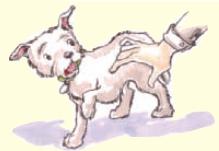
This training exercise, where you “play doctor” with your dog, will effectively teach him to become comfortable with being handled. In a quiet area of your home, have your dog on leash. Start by gently touching an area of his body that you think he isn’t likely to mind (usually around his back) for just one second, and then give him a piece of food. Repeat this process a few times and then move on to another part of his body. Many dogs are most sensitive around the head and feet, so handle these areas last so that your dog is clearly focused on the task at hand — allowing a brief touch for a bit of food. When he seems completely comfortable with a one-second touch on a particular body part, increase to two seconds before giving a piece of food. Your goal is to gradually increase the duration of each touch. ‘

It’s very important to go slowly. If you go too fast, you may miss subtle cues that your dog isn’t enjoying being touched in a certain area.  

Signs You’re Moving Too Fast 

If your dog does any of the following things excessively, you might be moving too quickly: 

  • Avoids eye contact with you 

  • Changes his ear placement 

  • Flinches 

  • Licks his lips more than normal 

  • Tries to pull away 

  • Yawns  

In that case, take a step or two backward. If you are touching for five seconds, for example, go back to one or two seconds and consider upping the payoff for your dog. Maybe at this stage in the training game, your dog requires a tasty treat instead of a piece of dry food in exchange for you holding his paw. 

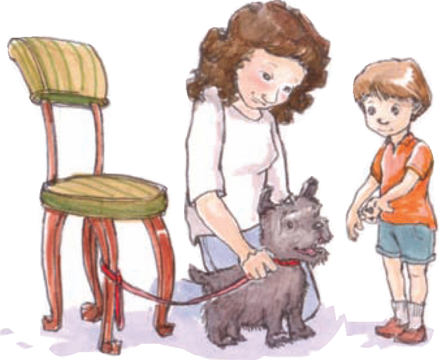
Don’t forget to gently examine your dog’s mouth, take a look inside his ears, and check between his toes. For each new area you touch, offer a tasty bit of food. Be especially generous when you touch areas that your dog is more sensitive about: often the feet and around the head. If your dog is squirmy, you can tie him to something stable or have someone hold him at the beginning so that you have both hands free to pet and reward promptly. 

Repeat this process with your dog’s grooming tools. Start with one stroke of the brush, and then offer a piece of food. Now try two strokes and then a piece of food. Pick up one foot, lay nail clippers against it, and offer a bit of food. Then look into one of his ears and offer a piece of food. Don’t rush things. Take time to make sure that your dog enjoys minimal examining before you actually clip a nail or clean his ear. 

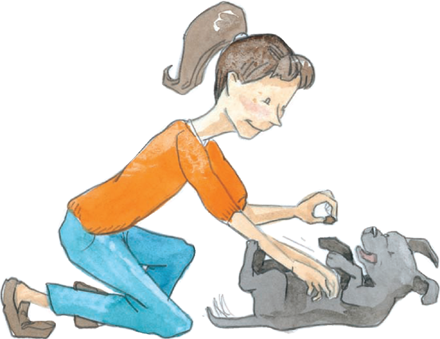
For the sake of both of your enjoyment, invite your dog over for a belly rub at least once a day. This is a great way to show him how enjoyable being handled can be. While rubbing him in a spot he likes very much, you can also gently handle his ears, feet, and other body parts. 

A tummy rub and a treat will teach any puppy to love handling.

Handling Checklist: Getting Used to Handling 

✓ Apply medications to your dog’s skin or in his eyes or ears. 

✓ Groom or bathe your dog. 

✓ Inspect your dog’s fur. 

✓ Look inside your dog’s ears and eyes. 

✓ Look inside your dog’s mouth. 

✓ Take things from your dog’s mouth. 

✓ Touch your dog’s back. 

✓ Touch your dog’s collar. 

✓ Touch your dog’s head. 

✓ Touch your dog’s paws. 

✓ Touch your dog’s rear end. 

✓ Touch your dog’s tummy.  

You Look Marvelous! 

 No matter what type of coat your dog has, he should be comfortable letting you groom him—even if it’s just to wipe his body with a towel, clip his nails, or clean his ears. If you set aside five minutes a day for a couple of weeks, you’ll find that you have a dog who loves to be groomed. Be gentle so that grooming becomes an enjoyable bonding experience rather than a stressful chore. 

Sharing Exercises

Much like us, dogs are likely to protect those things that they find valuable. While it is normal and natural for dogs to gather and guard food, bones, toys, and other re- sources, this instinct can get a pet dog into a whole lot of trouble. It is obviously not appropriate for a dog to growl or snap when someone tries to take something from him. You can help your dog avoid potential problems by showing him how rewarding it is to relinquish resources at your request.  

Resources Your Dog Might Consider Protecting 

✓ Food 

✓ Locations (such as a bed or couch) 

✓ People 

✓ Toys   

Mealtime Handling 

The food bowl is one of the resources a dog is most likely to guard. To prevent food bowl guarding, set aside at least a few minutes every day to participate in your dog’s mealtimes. Your goal is to have a dog who is comfortable with people being near him while he eats (you should be able to walk close by, touch him, and put your hands in the bowl while he eats), and who is comfortable with you taking his bowl away. 

Don’t just set your dog’s food down and walk away. Hang around while he eats. Touch him and talk to him. Every once in a while, particularly when you touch him, put a tasty treat in his bowl and show him how rewarding it is to have humans around his bowl. 

Mine! All mine! (This could be a problem. . . .) 

Sit next to your dog and hold his bowl in your hand or lap. Hand-feed him a few bits of his meal at a time as you gently touch a part of his body. Now put the bowl on the ground next to you, place your hand with a few bits of food in the empty bowl, and let your dog eat the food from your hand. Then place the empty bowl on the ground, drop in a few bits of food, and reach toward the bowl to drop in a few more bits — and maybe even a special treat that you know your dog likes better than his normal meal. This way, he will start to understand that having you (and eventually other people) near him makes his meals appear and sometimes be even better than normal. 

Practice getting up and walking a few feet away and then back to the bowl so that you can reach down, take it away, and offer a bit of food from the other hand, or simply drop a bit of food or a tasty treat into the bowl and give it back to your dog. In both cases, your dog is learning that your approaching (and even taking away) the bowl is a good thing. When possible and appropriate, include as many family members and friends in these exercises as possible. Be sure that children are always supervised around your dog, especially near the food bowl. If your adult dog is exhibiting signs of guarding (becoming tense, growling, or snapping when people come near the bowl), consult a dog-friendly trainer who can work with you in person to resolve this issue safely. 

Mealtimes are a terrific opportunity to teach your dog to love having people near his food bowl and to prevent resource guarding. 

Play the Trading Game 

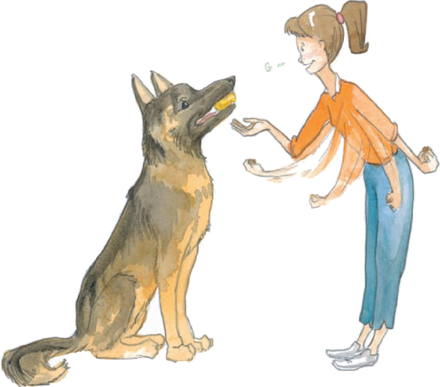
Regardless of how much he wants something, your dog must learn that if you or any other person reaches to take something away from him, he must relinquish it without a fuss. It is usually best to start this trading game with something that is of lower value to him, not his favorite toy. Simply offer him a toy and let him play with it for a moment or two. Then reach to take the toy as you say “thank you!” and offer a very tasty bit of food. Numerous repetitions of this game throughout the day are a surefire way to have your dog begging you to take away his toys. After a few three- to five-minute practice sessions, let him play with the toy (and get more engrossed in it) for a bit longer before you take it away and offer a treat. 

Gradually introduce new toys to play the trading game with, working up to his favorites. When you play with objects you know your dog is more interested in, use food rewards that are more valuable. That is, with a toy of little interest, you can use a piece of your dog’s dry food. But when trading for his favorite toy, offer a favorite treat. 

When you feel confident that your dog is happily relinquishing toys, you can start to teach him to respond to the words “thank you” without the signal of your hand showing the food. Just say the word and wait until your dog looks for your hand, mark the behavior of looking away from the object with a click or by saying “yes,” and then give the reward.

Teach your dog to enjoy exchanging valued possessions

Gotcha! 

In an emergency, you may need to grab your dog to get a hold of him, and a tragedy could result if your dog doesn’t allow you to do so. Teach your dog to accept being grabbed by teaching him that it is a rewarding experience. Many times throughout the day, reach down to grab your dog’s collar, say “Gotcha!” and at the same time give him a treat. In no time at all, your dog will love being grabbed. 


Many dogs learn to avoid letting people grab their collar because they think it means the end of play or they are in trouble. Teach your dog to love being grabbed by practicing the Gotcha! exercises many times each day. Pretty soon he’ll be begging to be grabbed! 

Preventing Nipping in Play

Puppies in a litter spend a lot of their time nipping at each other, so it is no surprise that your pup may think this sort of normal dog play is all right with you. But, just as your puppy must learn to inhibit his bites with his canine playmates (if he hurts his friends, they won’t want to play anymore), so must he learn to inhibit the use of his mouth with humans. In fact, learning to inhibit his formidable weapon is one of the most important lessons your dog will learn. 

Surprisingly and luckily, the more your puppy bites you when he is very young, the better his bite inhibition is likely to be as an adult. Each time your pup bites is an opportunity to remind him how sensitive human skin is. On the other hand, a puppy who never bites humans can’t learn how sensitive human skin is and how careful he must be. 

With this is mind, don’t attempt to tell your puppy to stop biting by yelling at him, grabbing his muzzle, or otherwise hurting him. Doing so may quickly stop the biting (for the moment) by scaring him. But imagine that one day your dog does bite someone, maybe because that person accidentally stepped on his paw. If this happens, it is essential that your dog cause as little harm as possible. You want a dog with superb bite inhibition. So the first thing to teach your pup is that human flesh is very sensitive, much more so than his litter mates’ skin. Your puppy should think about how careful he has to be when play-mouthing with you. Then you can work on curbing mouthing altogether.

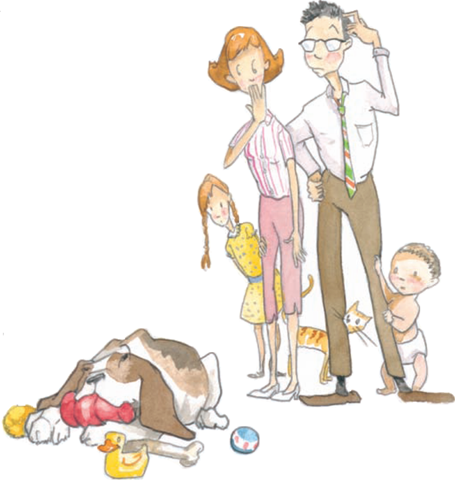
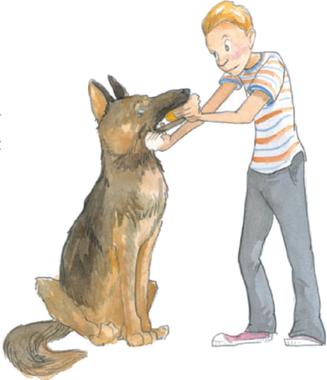
Don’t try this at home! Your dog can be trained to give on request.  

Start by playing with your puppy only when he has a leash on. If you play with your puppy when he is off leash and he nips you, you have no way to gain control of the situation unless you grab for your pup. This will most likely get him even more riled up (most pups love to be chased), and it may teach him to avoid you (if you reprimand him when you do catch him) and potentially teach him to avoid being grabbed —something you will regret if your dog ever gets off leash on the street by accident. 

Keeping the dog on leash is especially prudent for children, who can play with a puppy when supervised. This is the perfect way to prevent nipping, jumping, and overly exuberant play. You can also tether the pup to a stable object so that the child can get up and walk away without the pup being able to practice chasing and nipping. 

When your puppy goes to bite you, respond with a time-out by standing up (if you are in his long-term confinement area), using his leash to hold him gently at arm’s length, or stepping on the leash so he can’t move about and play. Wait a few moments, and then try playing again. The force of your pup’s next nibble should come down a bit. If not, give another on-leash timeout or tether the leash to a stable object and walk a foot or two away. 

Until your dog learns to play calmly with children, practice supervised play/training sessions with your dog on a leash so he remains stationed and calm.  

Simply ending playtime is an effective punishment for many puppies, since now your puppy has nothing and nobody to play with. You want him to think how boring it is when you stop playing with him (because he nipped you). This momentary social banishment is very effective. You are essentially telling your puppy that you will not play with him if he isn’t careful with your skin. 

After a week or so, the next step is to teach your pup to stop mouthing altogether. Some puppies will naturally decrease the frequency of their nips, especially when you have taught them to inhibit their force. When your puppy is 3 to 4 months old, it is time to teach him that he should not use his teeth on people at all. Using the same principle as when teaching bite inhibition, simply respond to any teeth on your skin (no matter how soft) with an end to the play session.  

Don’t Fight Fire with Fire 

If your dog nips you, don’t yell at him or go face to face to correct him. A hostile response might escalate the confrontation, or it might teach your puppy to hold back and wait to bite someone who isn’t able to use force or scare him enough to stop (like a child). Certainly, don’t grab for your dog’s muzzle to correct him. This will only teach him not to like hands reaching toward his face.

Teaching Your Dog to Take Food Gently

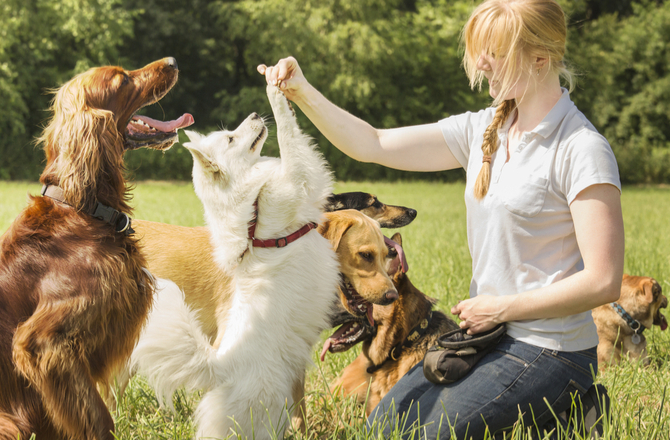
Most dogs are naturally enthusiastic about food and may nip at your fingers when you offer them something. It is important to teach your dog to take food gently so that you and others may safely offer your dog food in response to good behavior and for the purpose of socialization. This is especially true for children. Your dog will make fast friends with children if they can offer him tasty treats from their hands. 

If your dog takes food roughly, do not give him the food. Take your hand away and then bring it back to give your dog another chance to get the food. If he is more gentle the second time, open your hand and give him the treat. If not, take your hand away again. It may take many repetitions before your dog begins to understand how to get the food, but actions speak louder than words. So stay quiet and let your dog figure this out for himself. It may be helpful to have your dog on leash and tethered to a stable object so that you have both hands free and can stay just out of your dog’s reach should you want to step away and give him a time-out from training.

You can also simply keep your hand still and closed around the bit of food that you offer to your dog. He will probably try to get the food out of your hand by mouthing it and pawing. By keeping your hand closed and still, you are telling your dog (without words) what doesn’t work. He will eventually stop doing the behaviors that didn’t work and pull back, at which point you should open your hand and give him the food. Repeat until he automatically backs off and waits for you to open your hand and offer him the treat. By doing so, he is showing you that he can control his impulses and be thoughtful and careful when accepting food.