Tools to Help You Teach

Tools to help you train your dog are both concrete (things that you make or buy) and conceptual (methods). Tools include collars, leashes, toys, and treats as well as taking your dog for a walk as a reward for sitting when you ask and limiting your dog’s access to your home until she has learned good manners. 

Consider all the tools (both concrete and conceptual) that are at your disposal in your virtual trainer’s toolbox. A well-stocked toolbox is a necessity for any re- ward-based trainer. Wisely chosen training aids will help you set your dog up for success and reward her for appropriate behaviors. Training aids also serve to enrich your dog’s life, not only by keeping her mentally and physically stimulated but also by creating a dog who enjoys a peaceful and contented life with you since she so clearly understands what you want. 

While a visit to your local pet supply store can be a thrilling adventure for you and your dog, it can also seem daunting if your goal is to pinpoint the best tools for training. As reward-based training has become the rule, the marketplace has been flooded with an almost endless assortment of products to help you excel at setting your dog up for success and rewarding her for behaviors you want to reinforce. Here are some tips on how to narrow your search so that you can create a great trainer’s toolbox to aid in managing and enriching your dog’s life.

Rewards

Rewards 

Rewards are the most powerful tools in training. They are the best way to say to your dog, “I like what you’re doing.” Rewards are also the best way to keep your dog happy and interested in learning from you, and to make training fun for your dog, you, your family, and your friends. Rewards are at the heart of dog-friendly dog training.  

Listen to the Experts 

 Discoveries in the fields of psychology and education have had an incredible impact on all types of training: training children to be more focused and interested in the classroom, training employees to be more productive in the workplace, training families to communicate successfully, and, of course, training animals. Research has shown that positive reinforcement, not punishment, is the more effective approach. These findings were all but ignored in popular pet dog training until about the 1980’s.  

By definition, a reward is anything your dog likes. It can be a kind word, a scratch behind the ear, a walk in the park, a toss of a toy, or a bit of food. The list of possible rewards is endless, but it is important to keep in mind that each dog has unique preferences, just like we do. You should have a good idea of what your dog’s favorite rewards are. In fact, I recommend that you make a list of your dog’s top ten favorites. You will find that using your dog’s favorite rewards for new, more complicated, or difficult behaviors (such as teaching your dog to come when called while playing in a dog run) is a wise way to make the most of these tools.  

Behavioral Cement 

Each time you reward your dog, you make her more likely to repeat what she was doing when or immediately before you rewarded her. For example, give your dog a treat when she sits to greet you, and she will be more likely to do so again. Each time you reward her for greeting you politely, you strengthen that behavior (and weaken inappropriate greeting behaviors, such as jumping up). Also, you strength- en your relationship with your dog because you have shown her what makes you happy, and by rewarding her you have made her happy as well. 

Each and every reward increases your dog’s eagerness to want to do what you want her to do.  

Just as concrete reinforces the foundation of a building, rewards reinforce the foundation of your relationship with your dog by increasing the frequency of behaviors you like. By rewarding good behavior, you are cementing the relationship be- tween you and your dog.  

Endless Opportunities to Reward 

The list of rewards for your dog is endless. It’s a good thing there are so many different rewards, because using dog-friendly training methods means that you have endless opportunities to reward your dog.  

Teach Your Dog to Say “Please” 

Asking your dog to say “please” (for example, to sit) for dinner, for couch privileges, to go outside, or to play is one of the secrets of successful pet dog training.  

For example, a single trip to the park is an opportunity to reward your dog many times. Take the leash in your hand and wait for your dog to sit before putting it on. Take just one step forward and wait for your dog to sit again. Continue a few steps at a time (stopping for sits) until you get to the door. As always, before going through doors, wait for your dog to sit and then open the door and/or give her a little treat. Go to your car (a few steps at a time) and wait for your dog to sit before opening the car door. Once at the park, wait for your dog to sit before letting her out of your vehicle. Wait for your dog to sit before letting her off leash (if it is safe to do so) and telling her to go play. Let your dog romp around for a while and then call her back to sit for a treat. When your dog sits, tell her “Go play” again and toss a ball for her. 

Repeat this process many times as your dog investigates and plays. Every time you interrupt your dog’s activities by asking her to come and sit, you can tell her to “Go play” once more. By doing so, play becomes a reward, which reinforces obedience rather than becoming a distraction that would compete with obedience. So many rewards at your disposal during just one trip to the park!  

Don’t Be Stingy! 

While you should certainly vary when and what you give your dog, don’t be stingy about giving rewards, especially when you are starting to teach some- thing new. Think of yourself as a generous (but varied) slot machine. Re- warding generously means that the behaviors you like will be strongly reinforced and therefore more likely to become habit.  

Turn Your Dog into a Gambler 

The great thing about using rewards to train is that they are most effective when given inconsistently. This is convenient, too, because most of us are inconsistent in our behavior! 

To understand the effectiveness of inconsistent rewards, you simply need to watch a gambler in front of a slot machine. She will spend a lot of time playing the machine, even if the machine spits out only a few rewards. What is the glue that keeps her there? Inconsistent rewards! The gambler is hooked on playing the game because a big part of the fun is the expectation of a jackpot and the thrill of not knowing when the next reward will appear. 

A dog trained using dog-friendly methods is hooked on training like a gambler is hooked on gambling because you keep her guessing about when she will be re- warded and how valuable the reward will be (food, praise, a walk, or a ride in the car). In essence, you are your dog’s reward slot machine! 

Jackpot! 

Randomly rewarding your dog for behaviors you like will keep her hooked on playing the training game with you. Adding an occasional “jackpot” re- ward, one that’s extra-special, makes the game even more interesting and fun for you both. For example, when my dogs run to me especially fast when called, I make a bigger, happier fuss than usual.  

Choosing Rewards 

Your choice of what reward to use will depend on personal preference and, more important, on what works best for your dog. Know which rewards are your dog’s favorites and realize that this preference may change from day to day, and even from minute to minute. For example, if you have been playing fetch for ten minutes, this game might not be a high priority for your dog for a while. So try something different. 

It’s a good idea to write down a list of your dog’s favorite rewards ranked from one to ten. When you are working on new, more difficult, or very important behaviors (like coming when called) or in new or more distracting environments, you might use some of the highest-ranked rewards. Once your dog has learned some- thing, vary the rewards as much as possible. Remember, variety is the spice of life and the secret to a well-trained dog. Nothing is more boring than eating the same old lunch day after day, or watching the same movie every night. Being inventive with what and how often you offer rewards is the best way to keep your dog interested in playing the training game.  

These Are a Few of My Favorite Things 

List your dog’s favorite rewards and make the best use of the ones at the top of the list by saving them for times when she is learning something new or when she does something really special, like coming to you quickly when you call her. My dogs’ favorites are: 

  • Special food treats 

  • Food-stuffed toys 

  • Squeaky toys 

  • Going for a walk 

  • Playing fetch 

Invitations onto the bed 

  • Being petted 

  • Verbal praise 

  • Playing with other dogs 

  •  Playing on our agility course  

Verbal Praise 

Verbal praise such as “Good dog” or “Who’s a terrific pup?” is the first thing most people think of as a reward. Words are especially useful rewards because you always have your voice with you, and you can use it to reward your dog from a distance! 

Believe it or not, you may need to teach your dog that your voice means some- thing good. Dogs don’t start off understanding that human praise is a good thing, and some dogs’ early experiences in life actually make them wary of human voices (for example, as a result of being verbally reprimanded). Spend a week or so hand- feeding your dog part of her meals and talking to her, telling her that she is a good girl as you offer each piece. This way, she will learn to associate your voice with something all dogs like—food. You won’t always have to give a treat after praising her, because eventually the praise itself will become rewarding.

Attention and Affection 

Petting, scratching, and massaging are wonderful rewards for most dogs. This is great, because physical contact is one of the most enjoyable aspects of living with a dog. 

Attention and affection are especially good positive feedback for lengthy behaviors (such as a long down—see Chapter 7) and, of course, for teaching your dog to relax and enjoy handling, examination, and restraint. As a bonus, grooming, attention, and affection are equally relaxing for you, the trainer!

Be aware that attention and affection are also effective at unintentionally encouraging inappropriate and unwanted behaviors. For example, if you pet your dog when she whines and giggle when she jumps up on you, you are training her to do both. All you have to do is reserve attention and affection for times when your dog is well behaved. 

Some dogs may become overexcited when people touch them. If your dog is like this, either reserve hands-on petting for when your dog has a good foundation of training and impulse control (covered in Chapter 6) or use gentle, slow, rhythmic petting to soothe and calm your dog.  

Toys, Activities, and Games 

You can play a limitless number of games with your dog. Active games like chasing a tennis ball or toy, playing tug, or playing hide-and seek are terrific, but so are quieter games, like a family competition to see who can get your dog to lie down quietly for the longest time for a single piece of kibble.

Rewarding your dog with affection and games is as pleasant for you as it is for your dog. 

You have a huge variety of toys to choose from, including food stuffable toys, squeaky toys, tug toys, and balls. To figure out which toys your dog likes best, take your dog with you to the pet store and see if she shows a particular interest. Better yet, take her to visit friends with friendly dogs and see if she especially likes any of their toys. This is also a great way to maintain your dog’s socialization (see Chapter 4).

My favorite toys for dogs are hollow toys that can be stuffed with a variety of foods, including your dog’s normal dry or wet food as well as special treats. These toys should be all but indestructible (which means that they will last a very long time). Squeaky toys are great, but I suggest allowing your dog to play with them only when you are there to supervise.

Squeaky toys are generally easy to tear apart, and your dog could choke on some of the parts. Ropes and other tug toys are also good items to have in your reward repertoire, but they should be used for supervised play and only if you can ask your dog to let go of the toy and she does so without a fuss. (Later on I’ll talk about teaching your dog to share.) Toys are magically effective for training your dog to train herself when you are not around. For example, if you stuff a toy with your dog’s food, your dog will teach herself to play with her toy and not your shoes!   

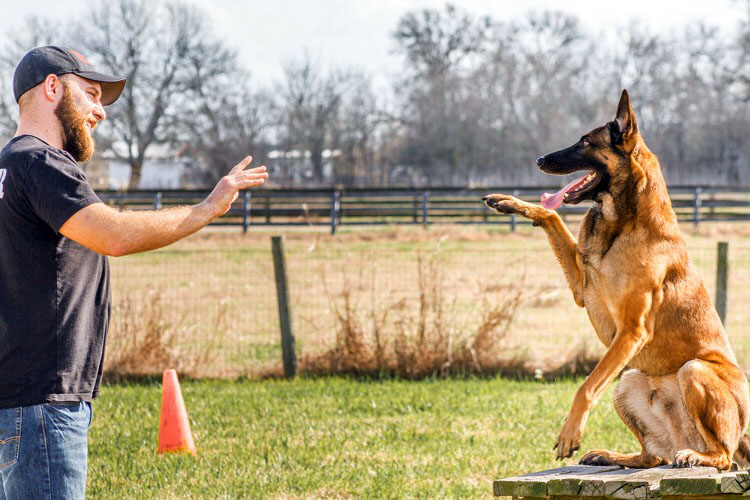
Make toys a valuable reward by controlling your dog’s access to them. If your dog has ten toys lying around the house, chances are none of them will work as an effective reward for very long. That is, if there is an ample supply of something, the demand is likely to be lower. But if you leave just a couple of stuffed chew toys out at a time and put the rest away, you will find that when you do take them out, your dog will be very interested in them. She’ll also want to know what you’d like her to do in order to get them! So ask her to come, sit, lie down, or otherwise earn these items.  

Food for Thought 

Food is one of the most perfect rewards! It works with every dog (every dog needs to eat), it is quick (especially soft, easy-to-chew types), it is easy to carry, and it is a wonderful way to gauge your dog’s mood (a fearful or highly stressed dog is less likely to eat). Food is especially convenient and easy to use during initial training, as it takes just a moment to reward your dog with a tiny treat that can be eaten quickly so that you can move right on to more training exercises. This is immensely valuable considering that repetition is the key to building physical and learning muscles.

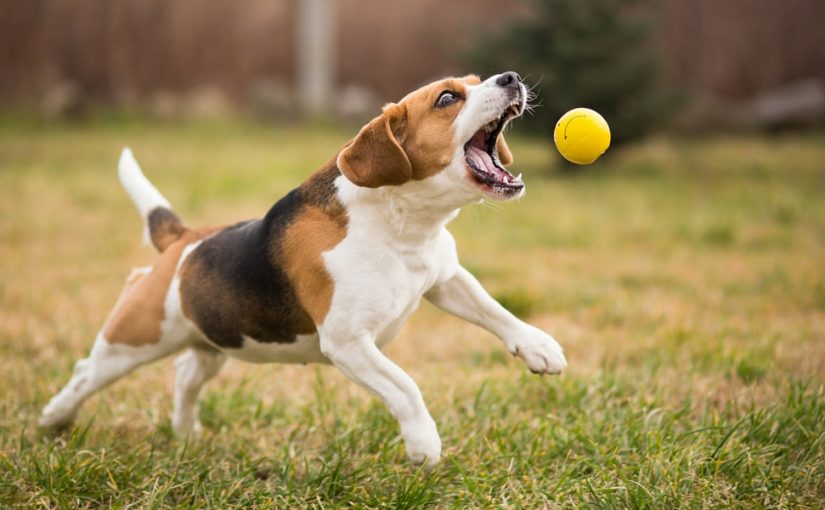
Fetch is one of the best activities to enjoy with your dog, and it’s a great way to practice sit (before the toy is tossed), come (as she runs to bring it back to you), and give (when she lets you have the toy back to toss again). Be sure to offer tiny treats as rewards so you can practice many repetitions. It is better to practice ten sits for tiny rewards than one sit for a large treat.

Moreover, offering a tiny bit of food enables you to pinpoint a moment of good behavior with precise timing. This is one of the reasons so many dogs working in movies and on television are trained using food as one of their primary rewards. Food is essential for keeping most dogs, especially those who must perform complicated behaviors, happy and reliable. 

In my training classes, some people express concerns about using food as a training tool. It’s difficult to understand people’s misgivings about food in training, especially since it makes training so easy and effective. These criticisms are generally unfounded and can be more accurately directed toward other training tools: for example, the all-too-common leash correction. However, in the case of using food, these concerns are baseless. The chart on pages 52–53 sets out the most common concerns about using food rewards and how they can be answered.

The Great Food Debate

For some strange reason, the use of food in training has become a controversial issue. Before we take any anti food sentiments too seriously, perhaps we should consider how humans domesticated the dog in the first place. Basically, Mr. Caveman got wild animals to keep their distance by yelling at them, but he lured wolves to come close by tossing them little morsels of — dare I say it? — food! 

Remember, ask your dog to sit (or down, stand, roll over, etc.) before every privilege and pleasurable activity — for example, a ride in the car to go to the park. 

Life Rewards 

Simple rewards such as toys, treats, and petting are especially effective for pin- pointing good behavior during initial training. And, like all rewards, toys, treats, and petting remain a wonderful permanent ingredient in the lifelong relationship between you and your dog, even after your dog is trained. But you will find that as your dog matures and develops her interests, some of the best rewards are relevant life rewards — allowing your dog to do what she wants as a reward for good behavior. These can be passive activities like being invited up on the couch, active events like continuing a walk or throwing a disc, or mind-blowing events like a trip to the park or the beach.

Concerns about Using Food  The Facts about Using Food  Equivalent Concerns about Using Punishment 
I don’t want to use food in training because then my dog will respond only when I have food to offer her.  There are many ways to decrease the use of food (or any reward) in training. Food lures are replaced by verbal cues and hand signals. Food rewards are sometimes replaced with motivating life rewards, such as activities and games, and are offered  I don’t want to use a leash in training because my dog will be obedient only when she’s on leash. 

only on a random schedule. 
Isn’t it demeaning to use treats during training?  Let’s get the dog’s opinion on this one! Personally, I love using food, and my dogs love when I use it, too.  Isn’t it demeaning to push, pull, squish, squash, and jerk your dog in training? 
Isn’t using food just bribing your dog?  I don’t want to bribe my dogs because, as most parents and politicians know, bribes seldom work in the long run. But rewards? They are a different matter. Don’t you look forward to payday at the end of the month? What’s wrong with paying a dog for a job well done?  Isn’t using physical punishment just unpleasant and hurtful? 
If I train my dog using food, won’t she get fat?  Not if you use good sense. Try weighing out your dog’s food in the morning, putting  If I use leash corrections, won’t my dog get hurt and scared? 

it in a container, and using it periodically throughout the day as rewards. No extra calories, but a whole lot of potential rewards. Even when you do use special treats, your dog is unlikely to gain weight if you ration them out thoughtfully and provide your dog with adequate exercise. 
What if my dog doesn’t care about food?  If your dog is not enthusiastic about food, you can train her to have a greater interest in earning her food by spending one week hand-feeding her at least part of her meals. But in reality, almost all puppies and most adult dogs will  What if my dog doesn’t care for punishment and shuts down from learning in anticipation of being punished? 

readily work for food, especially for special treats. 
What if food overexcites my dog?  The only efficient way to teach a dog not to touch food on the table, counter, or hand until given permission is to use food in training and when working on impulse control, both as a distraction and as a reward.  What if getting the leash makes my dog go crazy with anticipation of a walk? 

Train your dog well, and then the best reward for walking nicely by your side is that your dog gets to walk by your side. 

Your dog will find many things in the environment rewarding. For example, two of my dogs’ favorites are smells and squirrels. Instead of trying to compete with such valuable rewards (what some might call distractions), I use them to my benefit. On a typical walk in the park, I ask my dogs to sit or lie down a number of times. Occasionally, I reward them by releasing them to spend a few minutes sniffing a particularly enticing spot, or let them have an intense staring contest with one of the resident squirrels.  

The Ultimate Reward 

Dogs obviously enjoy reward training. They love praise, petting, toys, treats, and all the fun and games. Better yet, in no time at all, dogs come to enjoy the actual training activities. Indeed, for a reward-trained dog, the very best rewards are the actions and activities themselves. 

Your dog now runs to you quickly because she likes to run to you quickly. She walks by your side because that’s her favorite place to be and you are her favorite friend. Training that is built on gentle guidance, good communication, and oodles of rewards results in training itself becoming the ultimate reward. 

Once your dog has been reward trained, she will eventually require very little external reinforcement or motivation, since she enjoys playing the training game just as much as you do. 
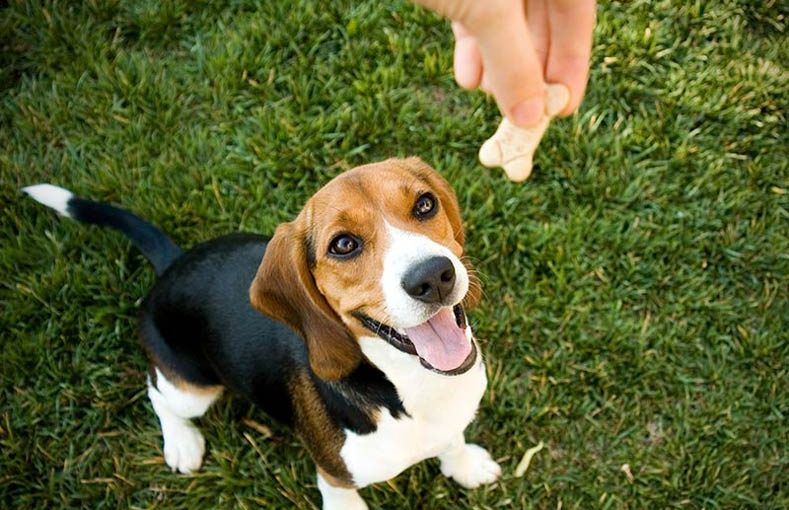
Consequences for Inappropriate Behavior

Removal of Rewards  

Removing the things your dog likes best is an extremely effective way to respond to inappropriate behavior. For example, if your dog is not giving you her full attention, show her the reward she could have won, whether it is a piece of food, a tennis ball, or a toy, and tell her, “Silly dog, you could have won this, but now you can’t have it.” Put it away, sit down, and read a book. After a few minutes, try again, and you will probably find that your dog has better focus and an improved attitude. She will see the value in paying attention to you. This is a great opportunity to remind her that you hold the key to her “resource treasure chest.”

When you begin training your dog, keeping her on leash where you can super- vise her, whether indoors or out, is the best way to get the maximum value from re- wards (and their removal). This way, your dog can’t just go off to look for fun else- where. Essentially, by controlling her access to resources and the environment, you make yourself more valuable. The leash can be tethered to a stable object (such as the couch you are sitting on), or you can step on the end of it or hold it in your hand to keep your dog from wandering about. Be sure she has at least two food-stuffed toys to keep her busy.

Because training soon becomes one of a reward-trained dog’s favorite activities, time out from training is the ultimate punishment. Time out means no more training, no more rewards, and no more trainer (the person your dog most wants to be with!). After a short break, your dog comes back refocused on spending time with you and on the wonderful benefits of interacting with you — play, treats, and toys. During the initial stages of training, having your dog on leash while you supervise her gives you a calm way of giving a time-out by holding the leash gently at arm’s length, stepping on the leash to keep your dog in one spot, using it to walk her calmly to her crate or long-term confinement area, or tethering the leash to a stable object. 

When a time-out is your best punishment, you know that you have a great relationship with your dog and you are training the right way.  

During the early stages of training, you can simply ignore your dog for a minute or two when she is tethered to a stable object a few feet away from you, put her in her long-term or short-term confinement area (discussed in Chapter 3), or actually leave the room. Note that when you begin training a very young pup, you should make a point of playing with and training your dog in her long-term confinement area so that it is safe for you to leave your dog alone immediately. Better yet, have your dog on leash so that all you have to do is stand up, step on the leash or hold it at arm’s length, and ignore her.

If you have two dogs, you can ignore the inattentive dog and offer your other dog numerous rewards. Not only does this approach relieve your frustration, but it is also the best way to get your inattentive dog’s attention.

Remember, after a time-out, instruct your dog to do something, such as come and sit, to reestablish your control and give her the opportunity to get back to playing the training game with you.  

Become a Great Reward Manipulator 

Focus on reinforcing your dog’s behavior by manipulating rewards. This is without a doubt the best way to train. You show the dog what you want her to do and then reward her when she does it. The best way to inhibit and eliminate unwanted behavior is to train your dog to want to do what you want. For example, teach your dog to sit and ask her to do so when she greets you. If she is sitting, she can’t be jumping on you! If your dog doesn’t comply, the best “punishment” is a temporary time-out from you, training, and rewards.

Instructive Redirection   

Many punishments do not have the desired effect because they are not instructive. They often simply confuse the dog and, in some cases, make her shut down out of frustration or fear, which is not a good state of mind when you are trying to teach her. Letting your dog know that she has made a mistake is not sufficient. Sure, your dog knows that you are upset, but what should she do to make things right? If you want your dog to learn what she should be doing, you must be instructive. “Get your toy!” is far more effective than “NO! Bad dog!” If your dog is about to eliminate indoors, the exclamation “Let’s go outside!” informs your dog where it is appropriate to go rather than scaring her with a “NO! Bad dog!”

Similarly, if you think your dog might jump up on visitors, simply instruct your dog to “Sit” rather than scream “No!” or “Aaargh!” or “Off!” once she has. Take this incident as a reminder that your dog is not yet ready to greet visitors off leash. So put the leash on when you bring her to the door to say hello and step on it so it is short enough that she can’t jump. 

Although screaming “No!” may startle the dog into non-activity for a moment, the dog is still not doing what you want, and she is likely to become more frantic (due partly to the stress of having been yelled at) and may go right back to doing what you don’t like again. Anyway, telling the dog what you want her to do is much easier on the dog and much more effective. This way, you are truly correcting in that you are helping your dog to be correct. 

It’s also important to teach your dog that tone and volume signal urgency, not the prospect of pain or punishment. Think of how you would want your dog to react in an emergency. If she gets off leash and starts to run across a busy street, you will probably panic and yell at her. If she thinks this means she’s in trouble, she may run away from you and get hurt.  

Booby Traps 

Booby traps may be effective occasionally, but they are still unpleasant (by definition), and most store-bought booby traps and alarm systems are very expensive. It is much easier and more effective to prevent your dog from misbehaving (confinement and supervision) and teach her an acceptable alternative behavior. For example, providing a little occupational therapy, such as a stuffed toy in your dog’s crate, will work better than booby traps all over your house to stop her from chew- ing inappropriate objects. 

Yelling at your dog really only teaches her that you are enjoying training as little as she is. Why not just calmly show her what you would like her to do and reward her for doing so? 

Non-Instructive Reprimands (Not Advised) 

Continually harping after your dog “No! Bad dog!” with high volume, a nasty tone, and an ugly face just tells your dog that you don’t like her. But you do like your dog; it is merely her behavior that you consider to be unacceptable.

Many owners lose it when reprimanding their dogs and end up yelling emotion- ally. Being yelled at is stressful. Like people, dogs have a hard time learning when under stress, so it’s unlikely that your dog will learn much (other than to be fearful of you) in the midst of your tirade. Why are you yelling? Your dog is not deaf! And if she is deaf, she can’t hear you! So, please, stop yelling. Instead, take a deep breath and look at the situation from the perspective of “What can I do to change this situation and set my dog up to be successful?” If your dog is raiding the kitchen garbage can, for example, get a can with a lid that your dog can’t penetrate, or find a way to prevent your dog from having unsupervised access to the kitchen.  

Negative Reinforcement (Not Advised) 

Negative reinforcement is the negation (or stopping) of punishment to reinforce appropriate behavior. An example would be using a shock collar to cause pain until your dog starts to run in your direction, at which point the shock is stopped. This is, of course, extremely unpleasant for your dog (and you), and it often brings with it very serious negative side effects, such as fear and potentially aggression. This approach puts you on thin ice regarding your dog’s temperament. Indeed, many dogs crack when negative reinforcement is applied.  

It’s Great to Be Good! 

A dog who is trained with dog-friendly methods will make many good decisions because she is counting on the potential reinforcement and because she has a history of being rewarded for those choices. In this case, you have a wonderful dog and should be proud that she got that way because she was rewarded for “good” behaviors instead of being punished for “bad” behaviors. If you train your dog not to do “bad” things because she may get caught and get in trouble, don’t be surprised if she looks for those opportunities when she won’t get caught. Your dog-friendly–trained dog won’t look for opportunities to get away with “bad” behaviors because she will be too busy looking for opportunities to bring about pleasant consequences.  

Physical Punishment (Definitely Not Advised) 

This is definitely not how you want to treat your best friend. Most disturbingly, physical punishment is almost always non-instructive—the dog has no idea why she is being abused and is under serious stress while the punishment is happening. Like us, a dog is not equipped to learn much when overwhelmed with fear. Harsh physical punishment is totally inappropriate, uncalled for, and utterly unacceptable in pet dog training.  

The Side Effects of Punishment 

Harsh physical or verbal punishments are relatively ineffective and may cause a number of serious side effects on the dog’s temperament and on your relationship. Even when punishment training seems to have been effective in resolving simple behavior problems, it invariably shakes the dog’s confidence and undermines the trusting relationship between trainer and dog. Punishments administered by the owner quickly become associated with both the owner and the training process. The result? The dog may learn to comply, grudgingly and perhaps only temporarily, but she also has begun to learn to dislike training — and the trainer.

For example, when a dog has been punished for jumping up, she may not jump up at the moment, but she probably likes the owner and greeting people just a little bit less. The trainer has won the battle but lost the war. The dog may become progressively more fearful with each punishment. If the dog ever expresses dislike for training, the “stubborn” dog will be punished more severely. And if the dog ever decides to correct the trainer for a poor choice in training techniques by growling or biting, the poor dog will most likely be more severely punished and possibly banished from her home.

One of the most common problems associated with punishment-based techniques is that many pet dogs quickly become desensitized to corrections, causing the owner to resort to stronger and stronger corrective actions. Gentle tugs on a buckle collar become firmer jerks on a metal choke collar, which are then replaced with even firmer yanks on a spiked metal “pinch” collar or zaps from an electric shock collar. The poor dog suffers because her owner did not fully understand a technique that at its best is severely flawed. Because dogs are social animals, they are often only too willing to put up with high-level punishment if only to be allowed to remain part of a social group. High-tech pain-delivery equipment is not the solution to the problems we have with our dogs.

No-No’s 

Rather than yelling “No!” at your dog when she does something you don’t like, why not give her a little constructive criticism? For example, if she is jumping, tell her to sit. If she seems to be looking for something to chew, give her a toy so that she doesn’t try out a table leg.

Finally, using punishment-based techniques is the best way to create behavior problems when you’re not at home. For example, after just one or two punishments for chewing inappropriate objects or eliminating in the wrong spot, the dog would no doubt become a closet chewer or eliminator, reserving her chewing and elimination activities for times when her owner is away. Your dog will wait until you leave to do things because then you, “the punisher,” are not there to punish. Think about when you exceed the speed limit. If you see a police car, you slow down, but you’ll continue to speed if you think you can get away with it. The same philosophy applies to your dog. If you punish her when you are there, she’ll learn to behave in certain ways when you are not there. Your dog is not misbehaving out of spite; she’s simply acting like a dog when she feels that it’s safe to do so—that is, when the big, bad punisher is not around. 

And punishment is time-consuming. You have to be present to punish your dog. Most people cannot and do not want to stay home all day so that they can constantly reprimand their dogs. As a result, punishment is often administered after the dog has already misbehaved, which is not only unpleasant and ineffective, but also means that the dog has been allowed to practice behaviors you don’t like. Why not just train the dog to chew one chew toy instead?

It cannot be overemphasized that the main focus of pet dog training is to teach dogs what you think is right, not to punish them for what you think is wrong. With- out a doubt, this is the easiest, most efficient, most effective, and indeed the most enjoyable way to teach your dog.

Training Tools to Buy

Lots of tools can help you train your dog. In fact, there are so many options that making a choice can be quite confusing! Really, though, you need only a few basics to get started. You can add to your toolbox as your training progresses and you have a better idea of what your dog’s favorite rewards and activities are.  

Buckle Collar 

Your dog needs a buckle collar, as it is essential for safety that she wear identification at all times, and ID tags can be most conveniently attached to a buckle collar. Similarly, a buckle collar offers a convenient attachment for your dog’s leash, so you can safely walk your dog and train her in open areas.  

Head Halter 

A head halter is a wonderful, humane alternative to a pain-inducing collar. A halter affords the owner a considerable mechanical advantage to manage the dog. Whether the dog is strong and active or very tiny, a head halter can be a wonderful training aid. 

A head halter is the physical equivalent of luring a dog with a food treat. Lead her by her head and the body will follow.  

Head halters work on the age-old horsey premise that it’s easier to lead an animal by her head than by her neck. There are a variety of halters on the market, each with its own innovations. When used correctly, these halters offer almost instantaneous control of rambunctious or untrained dogs. 

At first, your dog might find that this collar feels a bit strange (much in the same way that puppies react when first fitted with a buckle collar). To make the adjustment as easy as possible, simply spend one or two meals hand-feeding your dog her food as you put the halter on and take it off. Then stand up and entice your dog to walk with you by luring her with a piece of food. Walk smoothly, without jerking on the leash or stopping, and frequently reward your dog for walking with you. Before you know it, your dog will be happy to have the halter on because it signals the beginning of a delightful walk (which you will do more often now that your dog is so much easier to control).  

Looks Can Be Deceiving

Unfortunately, halter-type collars are sometimes mistaken for muzzles, creating an image problem for these handy tools. But don’t let their looks both- er you. They are gentle aids and work like a dream! 

The Reward/Reprimand Rainbow

Don’t make your dog blue. Reward your dog for getting it right. 

Leashes 

There are two basic options in the leash department: a standard 3 to 6 foot nylon or leather leash and a retractable leash. I strongly recommend using a standard leash until your dog has learned to walk nicely by your side. A retractable leash is useful for giving a dog a wider area to roam, but nothing encourages a dog to pull more than allowing constant tension in the leash. This is the case with retractable leashes. These leashes may not be as safe as a standard 3- to 6-foot leash, either, as your dog may get so far ahead of or behind you that she turns a corner without you and comes upon another dog or some hazard. Also, the plastic handle of a re- tractable leash can slip out of your hand, and if it falls to the ground it could scare your dog and cause her to run.

Would you ever try to jerk a bear around?  

The greatest benefit of leash training is safety. A leashed dog can safely be trained on the street, which is convenient because you want to be able to take your dog for walks on the street. Leash training also facilitates adult dog-training class- es, which are generally conducted with dogs on leash. The leash offers control and safety, which may be easily incorporated into reward-based training methods.  

The Leash Gets a Bum Rap 

Leash training has gained a bad reputation because so many people associate leashes with collar corrections and punishments. This is too bad, be- cause some aspects (such as safety) are extremely beneficial. The leash is a wonderful training tool to help your dog settle down and walk calmly on leash. Simply tie the leash to an immovable object and your dog will soon settle down. Even better, tie your dog’s leash and give her a food-stuffed toy. Before you know it, she will learn to settle down quietly and chew her chew toy.

For the leash to be effective, it doesn’t have to be used punitively. Walking your dog on leash is comparable to holding a child’s hand for gentle guidance. When walking a child on a busy city street, you hold his hand for safety. You don’t hold hands to hurt or cause pain. Think of a leash in the same way — a convenient means to hold your dog’s “hand.” Simply focus on using the leash passively (to gently guide and prevent unwanted behaviors) rather than actively (to jerk your dog around). Use the leash, but do not abuse the leash. Use it for safety and for occasional motivational prompting, but don’t use it to cause pain or administer harsh punishment. 

And remember: No matter how well trained you think your dog is, when out- doors keep her on leash unless you are absolutely sure that it is safe for her to be off leash.  

The Four C’s of Leash Safety 

1.Common sense 

2.Control 

3.Courtesy to others 

4.Catastrophe prevention  

Clicker 

A clicker is a small, handheld device that makes a distinct “click” sound when you press it. Repetitive pairing of the clicker sound with a reinforcer such as food makes the sound become what is called a conditioned reinforcer. In simple terms, this means you have taught your dog that the sound of the click means food (or some other reinforcer) is coming. The clicker is a fantastic way of letting your dog know that what she did at the exact moment the click happened is what earned her the reward. Many of my students also like to teach a verbal marker, such as the word “yes,” which, like the clicker, is repetitively paired with a food reward until the dog understands that hearing this word means that what she did at that exact moment earned her a reward. Both markers are useful. While a verbal marker is some- thing you always have with you, many professional trainers prefer a clicker because it makes a distinct and unique sound.

A clicker provides you a way to accurately pinpoint behaviors. 

Crate 

A crate is one of the most useful tools for just about every aspect of training. It is a valuable aid for house training, chew-toy training, and teaching your dog to calmly accept time alone, and it can be a wonderful convenience when you travel with your pet.

There are two basic kinds of crates: plastic and metal. I generally prefer plastic crates because they tend to make less noise (a dog moving about in a metal crate can be quite noisy) and tend to be more calming environments. Plastic crates are generally more appropriate for travel, and this slightly more enclosed structure may help increase your dog’s sense of comfort and safety.

The crate should be sized appropriately for your dog. It should be just large enough for your dog to stand up, turn around, and lie down in. Keep in mind that if you buy a crate for your young puppy, you may need a larger size when she grows up. A cost-efficient solution is to buy a large crate and block off part of it until your puppy grows into it.

Confining a dog to a crate with a stuffed chew toy is like confining a child to his room with a video game or a good book or a baby to her crib with fun toys!  Bear in mind that a crate is a temporary tool. Your dog may have full run of the house once she understands the rules, but you’ll probably find that your dog will still choose to go to her crate when she wants peace and quiet.  

Chew Toys 

Every dog should have at least ten hollow, food stuffable chew toys. Rotate the toys, giving your dog at least two to four freshly stuffed toys each day. When you are home and can supervise your dog, she can chew by your side or in her crate (until she is trained, and then she can chew anywhere in your home she is permitted). If you have to leave, let her settle comfortably in her confinement area with a few good chew toys. 

Most dogs will immediately become engrossed in a food-stuffed toy, especially if you are a creative stuffer. Try lots of different fillings to find which ones your dog likes best. Use just a small bit of filling and make it tough for your dog to get at it. You can also freeze the food-stuffed toy. Your dog will spend her day enjoyably en- grossed in the task of trying to get to the center of her chew toys. 

Creating a chew-toy habit in your dog may save you and your dog more grief and aggravation than you can possibly imagine. The list of “wrong” things your dog can do to keep herself occupied (both when you are home and especially while you are away) is endless. However, the list of “right” things your pet dog can do in your home is pretty short, especially when you aren’t home. Teaching your dog to do one “right” thing is obviously much easier and less time-consuming than teaching her not to do an endless list of wrongs.

Even the smallest dog can do a lot of damage to a home in a very short period. Damage done by chewing alone can be immense. But you can’t expect to stop your dog from chewing altogether. After all, chewing is one of the few pet dog hobbies we deem acceptable. All you have to do is teach your dog what to chew. The quick- est and easiest solution to many potential problems is to make your dog a chew toy– aholic!

Ideally, your dog should eat all of her meals out of these toys. This way, she has an appropriate outlet for her physical and mental energy. An adult dog who eats her food out of a bowl in five minutes is left with a great deal of time with nothing to do for the rest of the day. Instead, you can enrich your dog’s life by having her “hunt” for her food from food-stuffed toys.  

Paws to Consider 

Your dog’s crate and chew toys are most effective when used together. Put a food-stuffed toy in your dog’s crate before you leave and close the crate door with your dog out of the crate. This way, she will become occupied with getting into it, not with your imminent departure. The old saying “You always want what you can’t have” is at play here. When you open the door a minute or two later, chances are she will dive right in. 

Given the lack of “Working Retriever Wanted” ads in the employment section of your local paper, don’t be surprised if your dog ends up carrying any and every item that is not nailed to the wall around in her mouth. Play fetch with appropriate objects (toys). Then your dog will know that only certain things are meant to be played with.  

If you catch your dog in the act of chewing an inappropriate article, do not re- sort to yelling at her. Reprimanding her is the quickest way to develop an owner- absent chewing problem. She will learn to wait until you are gone to chew. Ultimately, you want her to chew only appropriate items regardless of your presence. Think about supervising her when you’re home and confining her to her area (a crate, an exercise pen, or a room that has been puppy-proofed) with some good chew toys when you can’t keep your eye on her. 

Don’t give your puppy or dog any items to chew on that resemble items you don’t want her to chew on. A dog can’t distinguish your worn-out tennis shoes from a brand-new pair. And don’t give your dog real bones that have been cooked. Once cooked, the bones soften and can splinter easily. Bone splinters can injure your dog’s mouth and stomach.  

Special Puppy Chew-Toy Considerations 

Between the ages of 3 and 6 months, your puppy will lose her baby teeth as her adult teeth grow in. During this time, your puppy will experience discomfort, and chewing will help to alleviate it. Make sure that your puppy always has an appropriate chew toy available, especially during this teething period. Some puppies like to chew on ice cubes or food-stuffed chew toys that have been frozen, which may help to numb the discomfort of teething.  

Let Your Dog Act a Little Wild 

In the wild, dogs spend 80 percent of their waking hours searching for food. But we put the same food in the same bowl in the same place every day. Make life a little more fun for your dog! Hide her dinner in a toy or, better yet, in a few different toys, and give your dog a chance to act like a dog again by “hunting” for her food.

Training Tools You Won’t Need

Devices designed to cause discomfort and pain exist because people believe that high-tech equipment is the cure-all for our dogs’ problems. But most expensive gadgets don’t offer a magic remedy. In reality, a better understanding of reward training is the answer. Resorting to extreme physical measures to train dogs just advertises that the trainer has neither understood nor applied the much more effective reward-based training techniques. 

Even when used correctly, painful punishment tools have significant side effects. These side effects often have disastrous consequences for the relationship between dog and owner. Work on training your dog in a friendly way instead. 

How Dogs Learn

Understanding how dogs learn provides many useful clues regarding how best to teach them and which tools to use to do so. Dogs’ thought is neither inferior nor superior to ours; it’s just different. Dogs are obviously not capable of solving even a simple math problem, but they excel when it comes to evaluating sensory input. What might fluster humans is second nature to dogs, and vice versa. Because of their superior senses, the dog world is in some ways much more vibrant than ours. And unlike us, dogs live very much in the present. They focus primarily on the here and now. 
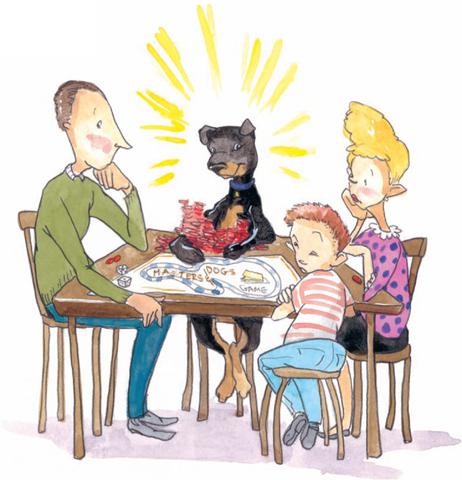
Manipulating the rewards in your dog’s life will bring you success in the training game. 

Your dog investigates everything in her universe and assesses the feedback from each stimulus. Behaviors followed by good consequences are much more likely to be repeated in the future. 

Dogs make thoughtful associations between their behavior and environmental cues and consequences. Moreover, dogs learn quickly by making new associations at an amazing rate. Thus, by providing appropriate feedback, owners can quickly and easily teach their dogs what they think is right. By manipulating the things your dog wants (food toys, attention, and life rewards) you can control the consequences of your dog’s actions, and you can teach her to do just about anything you want. By the same token, inappropriate feedback will teach your dog to do things you don’t want her to. For example, responding to your dog when she whines or jumps up on you will teach her that doing so is a good way to get your attention. So simply be sure your dog gets what she wants only when she does what you want.