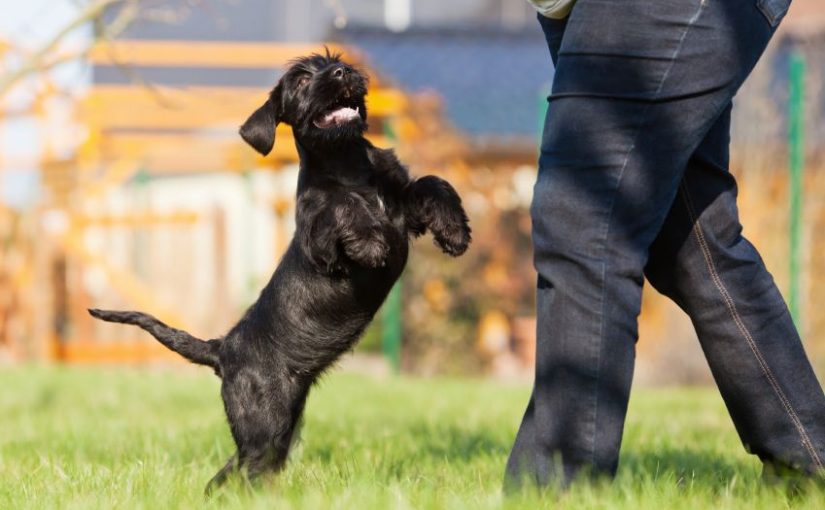
Dogs jump on people to say hello in an effort to be friendly, and because many dogs have not learned the requisite impulse control to manage their exuberance. Although you want your dog to be friendly with people, her excessive enthusiasm may keep friends away and make all that wonderful socialization go to waste. Your dog deserves to be taught how to greet people properly so that she can enjoy the pleasure of human company.
Frequently, dogs are reinforced for jumping up during puppy hood. It can be quite charming for a little pup to bound up to us enthusiastically and jump all about. However, reinforcing this behavior really isn’t fair to the pup, since it is unlikely that the behavior will be deemed appropriate once she is a grown-up dog.
Most adult dog jumping occurs when owners come home feeling guilty for having left the dog and in some cases are actually somewhat pleased that the dog is so happy to see them. Jumping up is also frequently reinforced by people outside your family who respond to your dog out of nervousness or embarrassment or because they don’t really mind the jumping since they don’t have to live with it long-term. But you do!
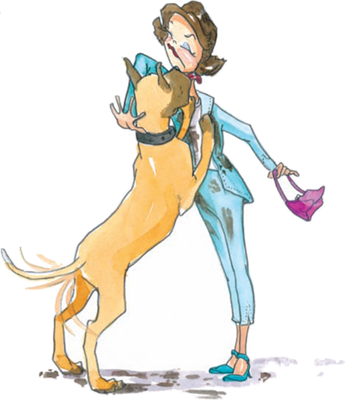
Understandably, most people would prefer to be greeted by a dog who has been taught to sit to say hello.
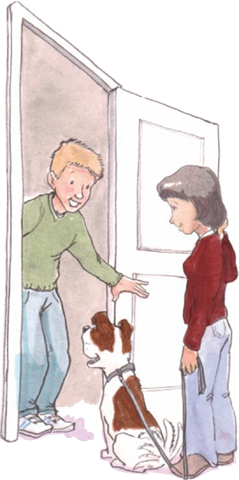
Until your dog learns good greeting manners, keep him on leash so that you can man- age and prevent inappropriate encounters, such as jumping.
Teach your dog to stand or sit to greet people and you won’t have to worry about her jumping. Most important, focus on managing your dog by keeping her on leash when she greets people until she has learned how to greet politely.
You can begin using the capturing method by simply waiting for your dog to sit and ignoring everything else she does, whether it be bouncing around or barking. The moment her rear hits the ground, say “yes” or click and offer a tiny treat. Tell her “okay” (or say whichever release word you’ve chosen) so she knows that she can get up, and then take a step away from her so she follows you to “greet” you again. Wait for the sit, and then mark and reward it. It shouldn’t take long for her to learn that sitting is the way to get rewarded.
When she sits automatically when you stop, you’re ready to progress to more difficult greetings. Take a few more steps between sits — the more you move, the more likely your dog is to get revved up. You can also try being verbally playful with her once you stop walking. Gradually increase your enthusiasm, and eventually you should be able to be as playful as you like, and your dog should respond with an equally happy, but seated, greeting.
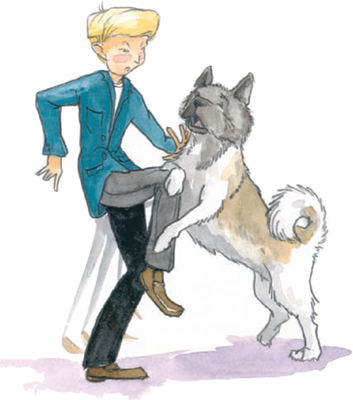
This dog may learn not to jump up, but she may also learn that she doesn’t want to greet people at all.
When you think that your dog is ready, have family members enter the front door numerous times during three- to five-minute training sessions, and then try inviting a few friends over. Have your dog’s meal or special treats ready. For each person who comes to the door, simply wait for your dog to sit, and then give her one piece of her food. If each person is kind enough to leave and come back ten times, you’ll have thirty practice sessions by inviting just three people over. If you want to speed things up a bit, lure your dog into a sit.
People have devised all sorts of ways to physically punish dogs for jumping up, such as jerking the leash, holding the dog’s paws, stepping on the dog’s hind feet, kneeing the dog in the chest, and flipping the dog over backward. Why not just train the dog to greet people appropriately? Why not train her to sit?
When an overly enthusiastic greeting is met with a physical punishment and/or a verbal correction, the dog may be left thinking, “I just wanted to say ‘hi.’ Wow, they must be angry at me. Let me try and make up by greeting them happily again.” Indeed, punishment often prompts your dog to jump up with renewed vigor, for which she is then met with a more severe punishment. The act of greeting people now becomes a confusing prospect. Some dogs with softer temperaments may be so confused and panicked that they begin to urinate when greeting people. What the owners perceive as a disgusting behavior is actually a way for the dog to say how submissive she feels in the face of potential punishment.