A well trained dog gets much more out of life. You can take your dog just about anywhere with you and bask in the pride you feel when your well-trained dog is ad- mired by one and all. All dogs, even the tiniest ones, must be taught to reliably respond to a few simple requests. The list of benefits to having a well-mannered dog is endless, including preventing a potential disaster if your dog gets off leash and does not come back when you call him.
Shirking the responsibility of training your new dog will only mean that you have to make a greater effort later on. Teaching your dog to respond to a few simple requests, such as sit, down, hand target, and come, is a great way to show him what you expect. This way, you can tell him what to do to be “right” in any given situation. For example, you can:
- Ask him to sit to greet people rather than jump on them.
- Ask him to lie down on his bed while your family eats dinner rather than get upset with him for begging at the table.
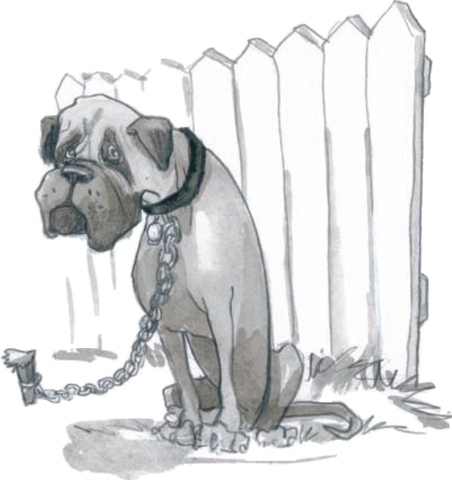
Did you get a dog so that your backyard could have a pet?
- Ask him to hand target rather than focus on another dog in the veterinarian’s waiting room.
- Ask him to come to you when you call rather than get angry with him for running after the cat.
When you think about it, it would be really cruel not to train your dog. Training consists of showing your dog what you want him to do. It’s too bad that many dogs are severely punished for behaviors their owners consider inappropriate, only because the owners didn’t bother to show the dogs what was expected. The poor dogs end up being punished for breaking rules they didn’t even know existed — all because of a lack of a little education and guidance.
English veterinarian and animal behaviorist Dr. Ian Dunbar considers training to be no different from teaching your dog ESL, or English as a Second Language. You’re not teaching your dog to come, sit, and lie down. Eight-week-old puppies know how to come, sit, and lie down. Instead, you’re teaching your dog the human signals (requests) for dog behaviors and actions. Wouldn’t it be unfair to invite a social animal into your home only to relegate it to a communication void in solitary confinement? Of course, you must socialize and communicate with your dog. And rather than attempting to communicate by using a variety of dog languages, employing odors, body postures, and tail wags, training conveniently enables you to talk to your dog in your own language.
Training Happens All the Time
Training is not just time set aside for your dog’s lessons. It’s part of everyday life. In fact, your dog is learning every waking moment, whether or not you are there and whether or not you are intentionally training him.