A great pet dog instills in his family the confidence that they or anyone else can easily handle and examine all parts of his body, take food and toys away from him, and play with him without fear of getting hurt. Practicing consistent gentling and handling exercises throughout your dog’s lifetime, starting when you first bring him home, is the best way to prevent problems, such as a dog who squiggles and squirms or, worse, growls or bites when you try to groom, medicate, or otherwise care for or play with him, or when you go near his food bowl or reach to take a toy from him. Teaching your dog to accept handling willingly and happily is a top priority. Don’t wait until your dog cuts his foot to find out that he doesn’t like having his feet touched, or until he growls at a visiting child who approaches his food bowl to find out that he guards his food and toys.
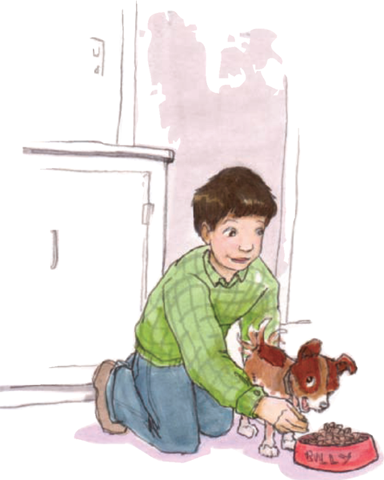
Consistently allowing your dog to eat his food alone may cause him to guard his food. Teach your dog to appreciate people being near his food bowl by making mealtimes a social experience.
As with all training, the more frequently you practice handling and the more fun and rewarding the exercises are, the more likely the exercises are to be successful. Therefore, practicing training exercises during your dog’s mealtimes is a great idea. You can practice body handling as well as basic manners. He’ll learn to associate being handled with something he already loves — his food. Also, since feeding your dog is part of your daily routine, practicing at mealtimes is a good reminder for you to maintain his skills by consistent repetition. Remember, the more you practice mealtime handling exercises, the more confident you can be that you will prevent problems later.
Whenever possible and appropriate, include family members and friends in mealtime training exercises to teach your dog to appreciate people being near him when he eats his meals.
Play Doctor
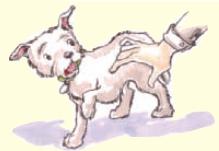
This training exercise, where you “play doctor” with your dog, will effectively teach him to become comfortable with being handled. In a quiet area of your home, have your dog on leash. Start by gently touching an area of his body that you think he isn’t likely to mind (usually around his back) for just one second, and then give him a piece of food. Repeat this process a few times and then move on to another part of his body. Many dogs are most sensitive around the head and feet, so handle these areas last so that your dog is clearly focused on the task at hand — allowing a brief touch for a bit of food. When he seems completely comfortable with a one-second touch on a particular body part, increase to two seconds before giving a piece of food. Your goal is to gradually increase the duration of each touch. ‘
It’s very important to go slowly. If you go too fast, you may miss subtle cues that your dog isn’t enjoying being touched in a certain area.
Signs You’re Moving Too Fast
If your dog does any of the following things excessively, you might be moving too quickly:
Avoids eye contact with you
Changes his ear placement
Flinches
Licks his lips more than normal
Tries to pull away
Yawns
In that case, take a step or two backward. If you are touching for five seconds, for example, go back to one or two seconds and consider upping the payoff for your dog. Maybe at this stage in the training game, your dog requires a tasty treat instead of a piece of dry food in exchange for you holding his paw.
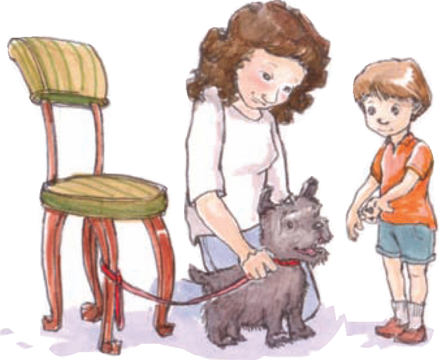
Don’t forget to gently examine your dog’s mouth, take a look inside his ears, and check between his toes. For each new area you touch, offer a tasty bit of food. Be especially generous when you touch areas that your dog is more sensitive about: often the feet and around the head. If your dog is squirmy, you can tie him to something stable or have someone hold him at the beginning so that you have both hands free to pet and reward promptly.
Repeat this process with your dog’s grooming tools. Start with one stroke of the brush, and then offer a piece of food. Now try two strokes and then a piece of food. Pick up one foot, lay nail clippers against it, and offer a bit of food. Then look into one of his ears and offer a piece of food. Don’t rush things. Take time to make sure that your dog enjoys minimal examining before you actually clip a nail or clean his ear.
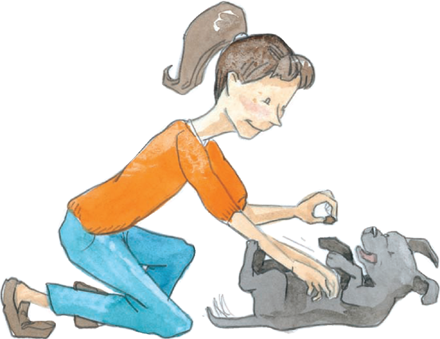
For the sake of both of your enjoyment, invite your dog over for a belly rub at least once a day. This is a great way to show him how enjoyable being handled can be. While rubbing him in a spot he likes very much, you can also gently handle his ears, feet, and other body parts.
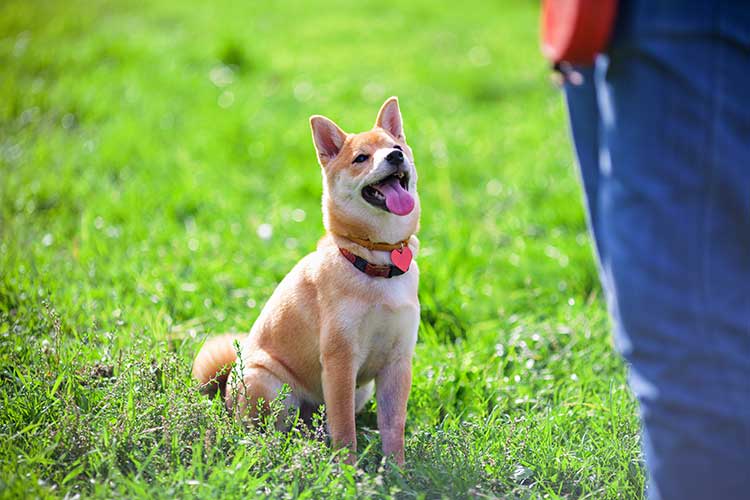
A tummy rub and a treat will teach any puppy to love handling.
Handling Checklist: Getting Used to Handling
✓ Apply medications to your dog’s skin or in his eyes or ears.
✓ Groom or bathe your dog.
✓ Inspect your dog’s fur.
✓ Look inside your dog’s ears and eyes.
✓ Look inside your dog’s mouth.
✓ Take things from your dog’s mouth.
✓ Touch your dog’s back.
✓ Touch your dog’s collar.
✓ Touch your dog’s head.
✓ Touch your dog’s paws.
✓ Touch your dog’s rear end.
✓ Touch your dog’s tummy.
You Look Marvelous!
No matter what type of coat your dog has, he should be comfortable letting you groom him—even if it’s just to wipe his body with a towel, clip his nails, or clean his ears. If you set aside five minutes a day for a couple of weeks, you’ll find that you have a dog who loves to be groomed. Be gentle so that grooming becomes an enjoyable bonding experience rather than a stressful chore.
Much like us, dogs are likely to protect those things that they find valuable. While it is normal and natural for dogs to gather and guard food, bones, toys, and other re- sources, this instinct can get a pet dog into a whole lot of trouble. It is obviously not appropriate for a dog to growl or snap when someone tries to take something from him. You can help your dog avoid potential problems by showing him how rewarding it is to relinquish resources at your request.
Resources Your Dog Might Consider Protecting
✓ Food
✓ Locations (such as a bed or couch)
✓ People
✓ Toys
Mealtime Handling
The food bowl is one of the resources a dog is most likely to guard. To prevent food bowl guarding, set aside at least a few minutes every day to participate in your dog’s mealtimes. Your goal is to have a dog who is comfortable with people being near him while he eats (you should be able to walk close by, touch him, and put your hands in the bowl while he eats), and who is comfortable with you taking his bowl away.
Don’t just set your dog’s food down and walk away. Hang around while he eats. Touch him and talk to him. Every once in a while, particularly when you touch him, put a tasty treat in his bowl and show him how rewarding it is to have humans around his bowl.
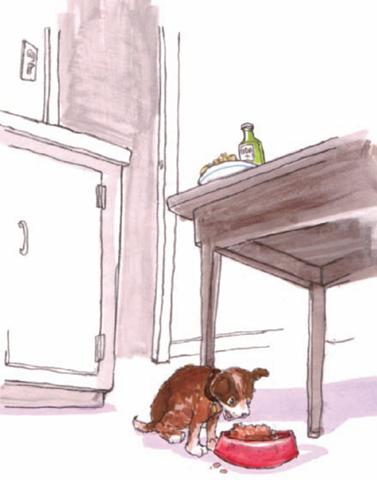
Mine! All mine! (This could be a problem. . . .)
Sit next to your dog and hold his bowl in your hand or lap. Hand-feed him a few bits of his meal at a time as you gently touch a part of his body. Now put the bowl on the ground next to you, place your hand with a few bits of food in the empty bowl, and let your dog eat the food from your hand. Then place the empty bowl on the ground, drop in a few bits of food, and reach toward the bowl to drop in a few more bits — and maybe even a special treat that you know your dog likes better than his normal meal. This way, he will start to understand that having you (and eventually other people) near him makes his meals appear and sometimes be even better than normal.
Practice getting up and walking a few feet away and then back to the bowl so that you can reach down, take it away, and offer a bit of food from the other hand, or simply drop a bit of food or a tasty treat into the bowl and give it back to your dog. In both cases, your dog is learning that your approaching (and even taking away) the bowl is a good thing. When possible and appropriate, include as many family members and friends in these exercises as possible. Be sure that children are always supervised around your dog, especially near the food bowl. If your adult dog is exhibiting signs of guarding (becoming tense, growling, or snapping when people come near the bowl), consult a dog-friendly trainer who can work with you in person to resolve this issue safely.
Mealtimes are a terrific opportunity to teach your dog to love having people near his food bowl and to prevent resource guarding.
Play the Trading Game
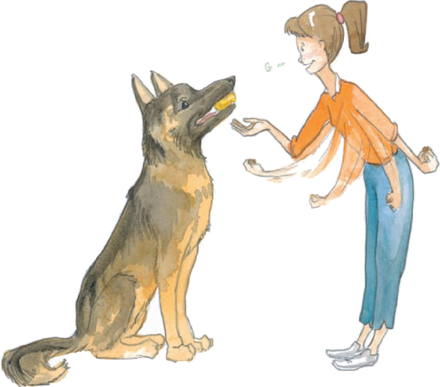
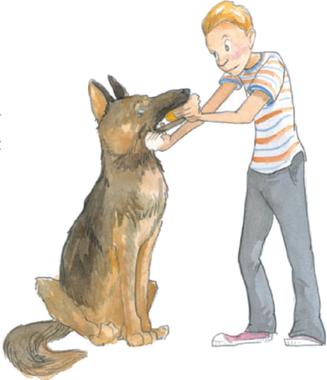
Regardless of how much he wants something, your dog must learn that if you or any other person reaches to take something away from him, he must relinquish it without a fuss. It is usually best to start this trading game with something that is of lower value to him, not his favorite toy. Simply offer him a toy and let him play with it for a moment or two. Then reach to take the toy as you say “thank you!” and offer a very tasty bit of food. Numerous repetitions of this game throughout the day are a surefire way to have your dog begging you to take away his toys. After a few three- to five-minute practice sessions, let him play with the toy (and get more engrossed in it) for a bit longer before you take it away and offer a treat.
Gradually introduce new toys to play the trading game with, working up to his favorites. When you play with objects you know your dog is more interested in, use food rewards that are more valuable. That is, with a toy of little interest, you can use a piece of your dog’s dry food. But when trading for his favorite toy, offer a favorite treat.
When you feel confident that your dog is happily relinquishing toys, you can start to teach him to respond to the words “thank you” without the signal of your hand showing the food. Just say the word and wait until your dog looks for your hand, mark the behavior of looking away from the object with a click or by saying “yes,” and then give the reward.
Teach your dog to enjoy exchanging valued possessions
Gotcha!
In an emergency, you may need to grab your dog to get a hold of him, and a tragedy could result if your dog doesn’t allow you to do so. Teach your dog to accept being grabbed by teaching him that it is a rewarding experience. Many times throughout the day, reach down to grab your dog’s collar, say “Gotcha!” and at the same time give him a treat. In no time at all, your dog will love being grabbed.
Many dogs learn to avoid letting people grab their collar because they think it means the end of play or they are in trouble. Teach your dog to love being grabbed by practicing the Gotcha! exercises many times each day. Pretty soon he’ll be begging to be grabbed!
Puppies in a litter spend a lot of their time nipping at each other, so it is no surprise that your pup may think this sort of normal dog play is all right with you. But, just as your puppy must learn to inhibit his bites with his canine playmates (if he hurts his friends, they won’t want to play anymore), so must he learn to inhibit the use of his mouth with humans. In fact, learning to inhibit his formidable weapon is one of the most important lessons your dog will learn.
Surprisingly and luckily, the more your puppy bites you when he is very young, the better his bite inhibition is likely to be as an adult. Each time your pup bites is an opportunity to remind him how sensitive human skin is. On the other hand, a puppy who never bites humans can’t learn how sensitive human skin is and how careful he must be.
With this is mind, don’t attempt to tell your puppy to stop biting by yelling at him, grabbing his muzzle, or otherwise hurting him. Doing so may quickly stop the biting (for the moment) by scaring him. But imagine that one day your dog does bite someone, maybe because that person accidentally stepped on his paw. If this happens, it is essential that your dog cause as little harm as possible. You want a dog with superb bite inhibition. So the first thing to teach your pup is that human flesh is very sensitive, much more so than his litter mates’ skin. Your puppy should think about how careful he has to be when play-mouthing with you. Then you can work on curbing mouthing altogether.
Don’t try this at home! Your dog can be trained to give on request.
Start by playing with your puppy only when he has a leash on. If you play with your puppy when he is off leash and he nips you, you have no way to gain control of the situation unless you grab for your pup. This will most likely get him even more riled up (most pups love to be chased), and it may teach him to avoid you (if you reprimand him when you do catch him) and potentially teach him to avoid being grabbed —something you will regret if your dog ever gets off leash on the street by accident.
Keeping the dog on leash is especially prudent for children, who can play with a puppy when supervised. This is the perfect way to prevent nipping, jumping, and overly exuberant play. You can also tether the pup to a stable object so that the child can get up and walk away without the pup being able to practice chasing and nipping.
When your puppy goes to bite you, respond with a time-out by standing up (if you are in his long-term confinement area), using his leash to hold him gently at arm’s length, or stepping on the leash so he can’t move about and play. Wait a few moments, and then try playing again. The force of your pup’s next nibble should come down a bit. If not, give another on-leash timeout or tether the leash to a stable object and walk a foot or two away.
Until your dog learns to play calmly with children, practice supervised play/training sessions with your dog on a leash so he remains stationed and calm.
Simply ending playtime is an effective punishment for many puppies, since now your puppy has nothing and nobody to play with. You want him to think how boring it is when you stop playing with him (because he nipped you). This momentary social banishment is very effective. You are essentially telling your puppy that you will not play with him if he isn’t careful with your skin.
After a week or so, the next step is to teach your pup to stop mouthing altogether. Some puppies will naturally decrease the frequency of their nips, especially when you have taught them to inhibit their force. When your puppy is 3 to 4 months old, it is time to teach him that he should not use his teeth on people at all. Using the same principle as when teaching bite inhibition, simply respond to any teeth on your skin (no matter how soft) with an end to the play session.
Don’t Fight Fire with Fire
If your dog nips you, don’t yell at him or go face to face to correct him. A hostile response might escalate the confrontation, or it might teach your puppy to hold back and wait to bite someone who isn’t able to use force or scare him enough to stop (like a child). Certainly, don’t grab for your dog’s muzzle to correct him. This will only teach him not to like hands reaching toward his face.
Most dogs are naturally enthusiastic about food and may nip at your fingers when you offer them something. It is important to teach your dog to take food gently so that you and others may safely offer your dog food in response to good behavior and for the purpose of socialization. This is especially true for children. Your dog will make fast friends with children if they can offer him tasty treats from their hands.
If your dog takes food roughly, do not give him the food. Take your hand away and then bring it back to give your dog another chance to get the food. If he is more gentle the second time, open your hand and give him the treat. If not, take your hand away again. It may take many repetitions before your dog begins to understand how to get the food, but actions speak louder than words. So stay quiet and let your dog figure this out for himself. It may be helpful to have your dog on leash and tethered to a stable object so that you have both hands free and can stay just out of your dog’s reach should you want to step away and give him a time-out from training.
You can also simply keep your hand still and closed around the bit of food that you offer to your dog. He will probably try to get the food out of your hand by mouthing it and pawing. By keeping your hand closed and still, you are telling your dog (without words) what doesn’t work. He will eventually stop doing the behaviors that didn’t work and pull back, at which point you should open your hand and give him the food. Repeat until he automatically backs off and waits for you to open your hand and offer him the treat. By doing so, he is showing you that he can control his impulses and be thoughtful and careful when accepting food.
A great dog waits patiently and asks appropriately for what she wants. A demanding and impatient dog is likely to whine, bark, and jump to get what she wants. A dog in this state is similar to a child who is distraught over the injustice of not getting what she wants when she wants it —which is usually right now!
As a dog-friendly trainer, you recognize that while it is normal for a dog to want to access reinforces (anything she wants) as directly and promptly as possible, a dog who behaves in this way is not likely to enjoy as many freedoms or be adored by all as she might be if she just learned a little self-control. Your dog needs to learn that the only way to get what she wants is to wait for you to give her permission. You are the source of all the things she wants, and the only way to get you (or anyone else) to give her those things is to remain calm and do as requested.
Developing your dog’s self-control will facilitate a better relationship between you and potentially a longer and safer life for your dog, too. A dog with great self- control is much less likely to run through a doorway or out of a car door and onto the street where she may get hurt. She is also less likely to grab food from some- one’s hand and potentially cause injury by not being careful and thoughtful enough to take the food gently when given permission.
People who feel bad when they don’t give a dog what she wants inadvertently encourage the dog’s lack of self-control. This is a perfect example of killing with kindness — that is, trying to do right by a dog but ultimately teaching her very bad manners that will affect all aspects of her life.
The main focus of teaching impulse control is to stop everything when your dog gets into a demanding frenzy. Ignore your dog completely, and be sure she gets no access to the thing she wants. If she gets herself into a tizzy at the front door demanding that you open it for her, for example, simply stop and wait. Remain perfectly still. It shouldn’t take her long to figure out what she has to do to get you to open the door. When she remains still and quiet for a moment, mark with a click or by saying “yes” and reward her by opening the door. Likewise, as you prepare her meals, stop all preparations if she does anything other than wait calmly for you to finish. You can put the food out of your dog’s reach and walk away. Walk back to the feeding area when your dog is calm with four feet on the floor. This may take many repetitions, but eventually your dog will learn to stay calm while food is being prepared.
Silence Is Golden
If your dog is being impulsive, it is best to ignore her completely and make sure that she has no access to what she desires. This way, she learns that those behaviors don’t work. It may be difficult at first to teach this principle without saying words such as “off,” “down,” or “no,” but the benefit of this silent way of teaching is that your dog will learn to stay calm without you having to say these things constantly.
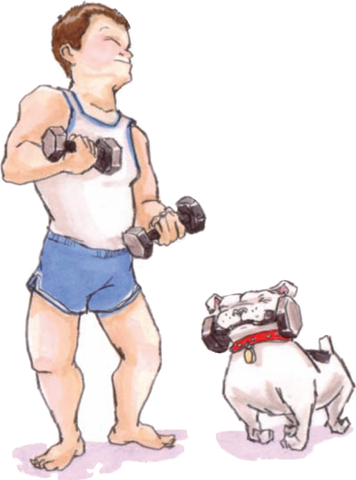
Repetitions are the key to building physical muscles and learning muscles.
To follow are some excellent impulse control exercises that you can begin to teach in a calm environment. As your dog masters these skills, practice them in more distracting areas and eventually implement them into your dog’s daily routine. For example, teaching your dog not to touch a treat on the ground until given permission to do so can be an exercise that you repeat at mealtimes when you place your dog’s food bowl or food-dispensing toy on the floor. Practicing these exercises in as many environments and as frequently as possible is the best way to develop a dog who understands that good things come to those who wait!
Since your dog is genetically predisposed to “take things now!” keep in mind that helping her learn to control her impulses in many different environments and scenarios will require many repetitions. For example, your dog might learn to show impulse control in the following exercises in your living room, but will need to essentially relearn how to control herself in more stimulating environments, such as on the street and around children and other dogs.
In addition to consistent repetition, be very generous with reinforcements so you convince your dog that waiting for something — which is typically not a natural instinct for dogs — is the best option.
Don’t Encourage Impulsive Behavior!
Be careful not to accidentally decrease impulse control by:
Giving your dog a meal after she jumps about as you prepare it.
Allowing anyone to talk to your dog (even to say something like “off,” which is negative, but is still attention) when she jumps up.
Allowing anyone to talk to your dog when she barks.
Allowing anyone to let your dog out of her crate, exercise pen, or any other enclosure when she is jumping, barking, or whining.
Allowing anyone to give your dog a treat when she jumps for it or takes it in a rough manner. (You should not feel teeth on your hand.)
Allowing your dog to greet or play with other dogs when she drags you to- ward them.
Allowing your dog to grab things off counters and tabletops.
Allowing your dog to grab things from your hand.
For Most Dogs, Negative Attention Is Better Than None at All
Talking to or even looking at your dog when she barks, whines, or jumps is likely to reinforce the behaviors happening at that moment. For most dogs, any attention — even negative attention, such as yelling “no”— can be very reinforcing, as it is better than no attention at all.
This exercise is an easy way to teach your dog to keep four feet on the ground when someone is holding food nearby. Hold a tiny treat about one foot above your dog’s head. If your dog jumps for it, quickly lift your hand out of your dog’s reach, and don’t say a word. If your dog stays standing or sits for even one second, mark this behavior with a click or by saying “yes” and give her the treat.
Because you can repeat this game so quickly, you should be able to practice many repetitions in each three- to five-minute session. It usually takes just one or two sessions for your dog to understand that jumping makes the food go away and standing or sitting makes it appear. But your goal is to teach her to do so for as long as necessary — that is, not to jump for the food at all. When your dog is keeping four paws on the ground for a count of one, you can gradually increase the time you ask her to hold the position by delaying the mark and reward. Gradually in- crease the count to two, three, four, and so on, but be careful not to go too quickly, even if you have a super-smart dog. As with every training exercise, your goal is to set a solid foundation, which is best done slowly.
Time-outs are one of the most effective punishments. They tell your dog that whatever he was doing right before it happened resulted in him losing access to anything he wants, such as treats, toys, or your attention.
As you increase the duration you ask your dog to control herself, consider in- creasing the value of the reward. Maybe try using a tastier treat. Most important, be sure to be a generous re warder. The pieces can be tiny, but should be offered frequently so that your dog learns how valuable it is to wait.
Actions Speak Louder Than Words
As a calm, gentle trainer, remind yourself that actions speak louder than words. Think of yourself as having an on/off switch that your dog can control with her behavior. Jumping, barking, and whining make you turn off, and sitting politely and waiting make you turn you on.
Wait, Please
There are two parts to teaching your dog to wait to touch food or other objects until given permission. If you practiced the anti–jumping bean exercise described above, you have already laid a foundation for this exercise.
Teach your dog not to touch things that you are holding.
2. Teach your dog not to touch things that you place on the ground or on an- other surface.
Start with number 1. Hold a piece of food in your closed hand. Ignore your dog when she pushes at your hand to get the food. Ignore everything she does to get at it (she may paw or bark). When she stops and backs off, click or say “yes,” open your hand, and say “take it.” To begin, even a momentary retreat should be marked and rewarded.
One of the foundations of impulse control is your dog learning not to charge for his food bowl until you have given him permission.
Gradually increase the length of time you ask your dog to avoid making contact with your hand before you mark and reward. When you feel confident that she understands what is expected, you can add a cue like “leave it.” Say “leave it,” present your closed hand, wait for your dog to back off, and then open your hand and say “take it.” She’ll learn that the only way to get the food after you say “leave it” is not to touch your hand.
To teach your dog not to touch a treat (or object) placed on the floor, sit on the floor next to your dog and ask her to sit or lie down. Place a piece of food on the ground about 12 inches away from your dog. If she gets up to take it (which she surely will), simply lift the food off the floor and either ignore your dog and wait for her to sit or lie down on her own, or ask her to. Place the food back on the ground and try again. If she refrains from going toward the food for even a moment (one second will do!), mark with a click or by saying “yes,” and let her take the food. Gradually increase the length of time she is required to refrain from taking the food.
When you feel confident that your dog has a reliable understanding of and adherence to what is expected, you can start dropping the food on the ground from an inch or so above the floor. Gradually increase this distance until you are able to drop the treat from a standing position. If your pup forgets her manners and jumps up to get the food and you think you won’t be quick enough to reach down to take it away, try stepping on it!
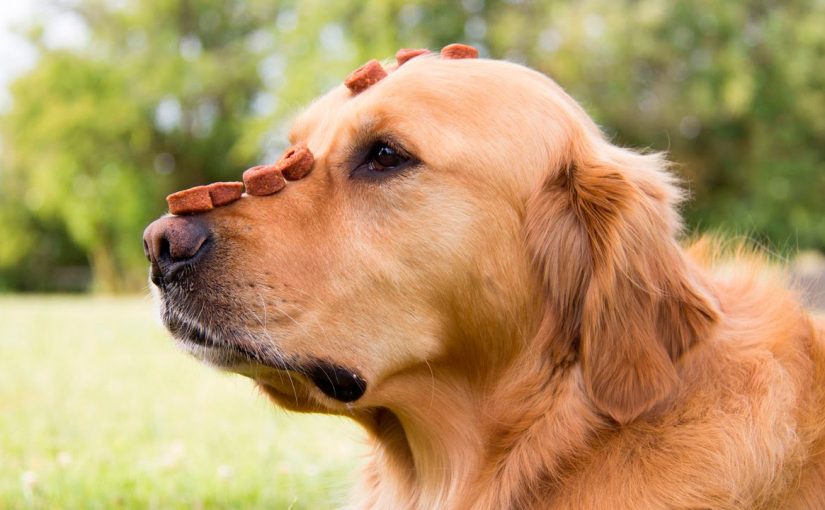
You can also work separately on decreasing the distance the food is away from your dog. But when doing so, be sure to decrease the time. For example, if your dog has a solid fifteen-second wait while the treat is 12 inches away, start back at one or two seconds when you move the treat a few inches closer. Most dogs can master this challenge so well that you can eventually place the treat on their paw and they won’t touch it until given permission to do so.
What terrific self-control!
Yippee, You’re Here!
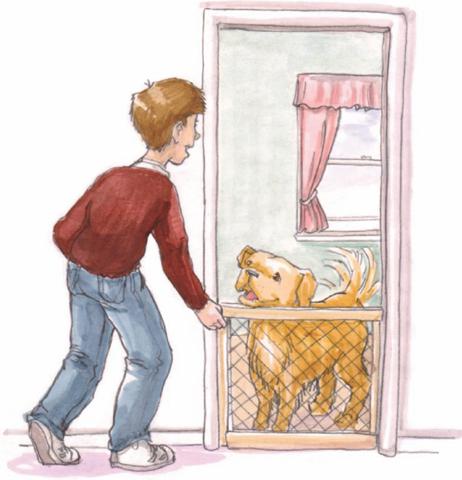
When your dog is confined away from you in any manner (in her crate, tethered on a leash, behind a baby gate, or in another room), teach her that the only way to get you to approach is to keep all four feet on the floor. If she jumps, turn or walk away. When she has all four feet on the floor, start approaching again. As with all teaching, it will take many repetitions for your dog to figure out that keeping four feet on the floor is the way to get you to approach. You may find yourself walking back and forth for a few minutes until your dog is able to contain her enthusiasm.
On/Off Switch
In this game, you help your dog learn to show self-control in stimulating situations, such as around children or crowds. This on/off exercise is also a great opportunity to use play as a reward for self-control.
Start by playing with your dog in very short bursts separated by short periods of lying down. To begin, short sessions are best because some dogs will become overstimulated. As your dog masters the concept that lying down calmly is the way to get the game to start again, you can vary the length of time you play and ask your dog to lie down. Calming to a less aroused state is easier for some dogs than others, so it’s important to have a good idea of what level your dog can handle and not to push her too far too fast. As with all dog-friendly training, your goal is to set your dog up to be successful.
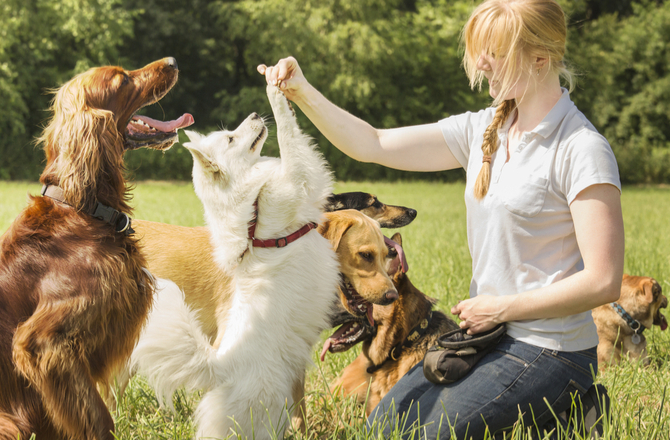
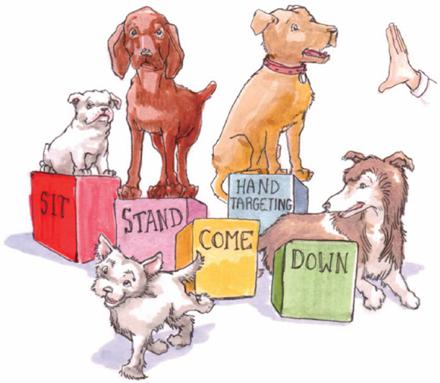
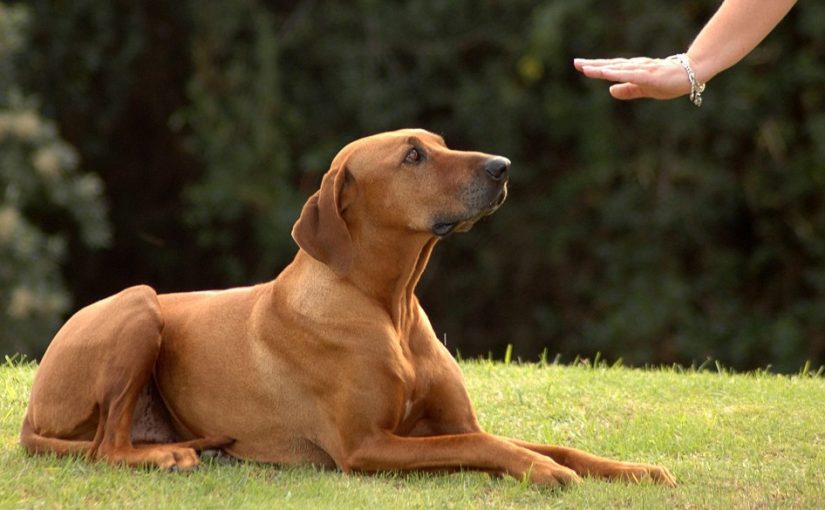
The five cornerstones of your dog’s basic manners are sit, down, and stand (the position changes), plus hand targeting and the notion of closeness. By teaching these five things, you will be able to show your dog how to behave in nearly any circumstance. For example, you can ask him to sit to greet people politely, to lie down quietly while the family is eating, and to stand still while being examined by a veterinarian or groomer. Hand targeting enables you to redirect your dog’s attention and gently and easily guide him where you want him to go.
It is also a terrific exercise for ensuring that your dog is confident and enthusiastic about hands reaching toward him. Teaching your dog the desire to be close is the very essence of teaching him to walk calmly by your side down a busy street and to come back to you when you call him. Teaching these basics is vital to enjoying a fulfilling relationship with your dog, whether he is a tiny Chihuahua or an enormous St. Bernard.
The building blocks of basic manners are sit, down, stand, hand targeting, and come (the desire to be close).
When teaching basic manners, keep in mind the principles of dog-friendly dog training:
Always concentrate on teaching your dog what you want him to do. Remember, a reliable sit, down, stand, or hand target will prevent just about any behavior problem.
2. Until your dog is reliably trained, manage his lack of education; for example, keep him on leash and out of trouble.
3. Use gentle methods to teach your dog quickly and enjoyably. We all learn better when we are in a relaxed and happy state of mind.
A well trained dog gets much more out of life. You can take your dog just about anywhere with you and bask in the pride you feel when your well-trained dog is ad- mired by one and all. All dogs, even the tiniest ones, must be taught to reliably respond to a few simple requests. The list of benefits to having a well-mannered dog is endless, including preventing a potential disaster if your dog gets off leash and does not come back when you call him.
Shirking the responsibility of training your new dog will only mean that you have to make a greater effort later on. Teaching your dog to respond to a few simple requests, such as sit, down, hand target, and come, is a great way to show him what you expect. This way, you can tell him what to do to be “right” in any given situation. For example, you can:
Ask him to sit to greet people rather than jump on them.
Ask him to lie down on his bed while your family eats dinner rather than get upset with him for begging at the table.
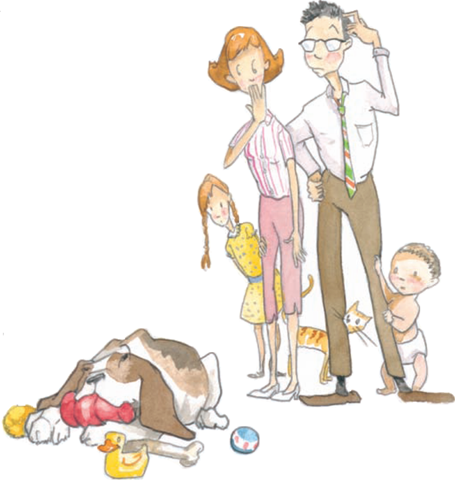
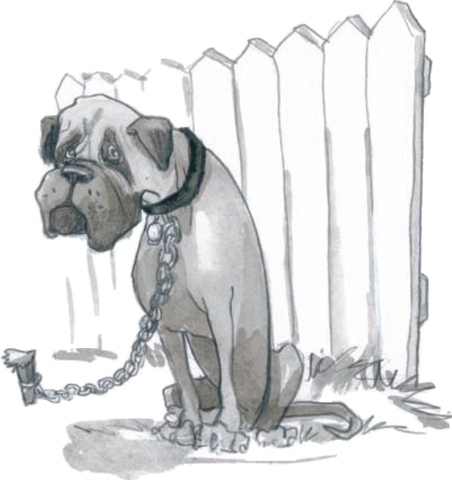
Did you get a dog so that your backyard could have a pet?
Ask him to hand target rather than focus on another dog in the veterinarian’s waiting room.
Ask him to come to you when you call rather than get angry with him for running after the cat.
When you think about it, it would be really cruel not to train your dog. Training consists of showing your dog what you want him to do. It’s too bad that many dogs are severely punished for behaviors their owners consider inappropriate, only because the owners didn’t bother to show the dogs what was expected. The poor dogs end up being punished for breaking rules they didn’t even know existed — all because of a lack of a little education and guidance.
English veterinarian and animal behaviorist Dr. Ian Dunbar considers training to be no different from teaching your dog ESL, or English as a Second Language. You’re not teaching your dog to come, sit, and lie down. Eight-week-old puppies know how to come, sit, and lie down. Instead, you’re teaching your dog the human signals (requests) for dog behaviors and actions. Wouldn’t it be unfair to invite a social animal into your home only to relegate it to a communication void in solitary confinement? Of course, you must socialize and communicate with your dog. And rather than attempting to communicate by using a variety of dog languages, employing odors, body postures, and tail wags, training conveniently enables you to talk to your dog in your own language.
Training Happens All the Time
Training is not just time set aside for your dog’s lessons. It’s part of everyday life. In fact, your dog is learning every waking moment, whether or not you are there and whether or not you are intentionally training him.